Tuesday, December 30, 2014

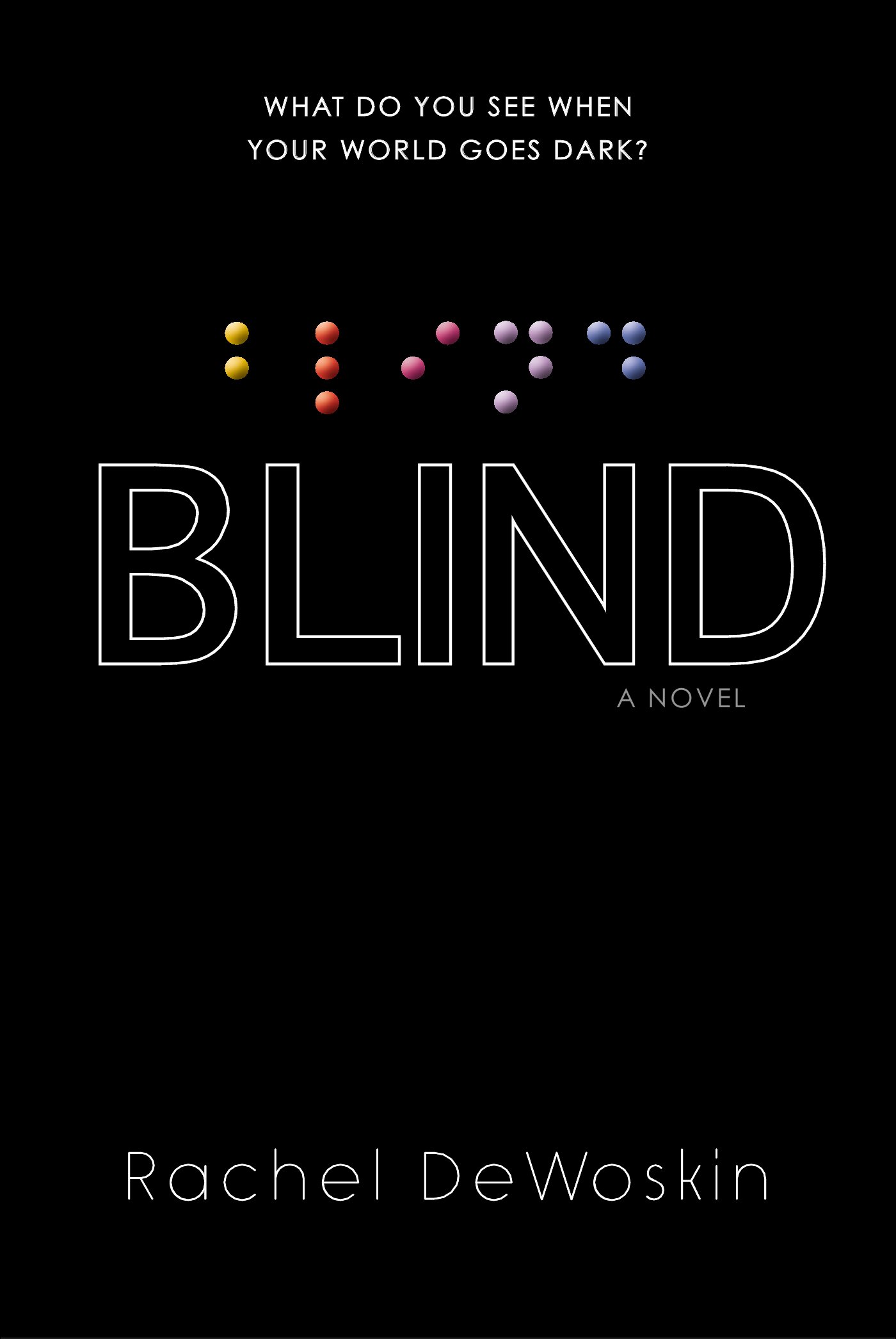
Blind

Blind
Rachel Dewoskin
(Trigger Warnings for the book: Genital mentions, accident, alcohol, fire, suicide, drugs, animal harm/death)

(The following summary is from Goodreads. Look, I'm already behind on reviewing, you want it to take longer?)

When Emma Sasha Silver loses her eyesight in a nightmare accident, she must relearn everything from walking across the street to recognizing her own sisters to imagining colors. One of seven children, Emma used to be the invisible kid, but now it seems everyone is watching her. And just as she's about to start high school and try to recover her friendships and former life, one of her classmates is found dead in an apparent suicide. Fifteen and blind, Emma has to untangle what happened and why - in order to see for herself what makes life worth living.

Okay, this review is split into two parts. The first is a draft of the review when I was only halfway through. The second is now, when the book is done.
Part One
  
Unlike most books on here, I didn't pick up this book because 'wow! That sounds interesting!' (that came later), but instead the creeping feeling that I should. It was on one of my lists, and I was curious. Would I need to take it off the list? Was it even a good book? So, out of curiosity and some vague worries, I picked it up.

The first thing I noticed was backstory. This is kind of alarming, because I usually feed on a diet of trashy mermaid romances where backstory and plot are treating like some kind of plague. And Blind has a lot of backstory. A lot. While the book follows the plot of a murder mystery type scenario, it would be a bit easier to say that it was about Emma's journey from first being blinded to accepting her disability and doing the things she wants to do. This isn't necessarily a bad thing. Actually, the backstory is really interesting. 

It would be nice, however, if the book was a little less expound-y. It wasn't fluff sentences or fluff scenes that were the problem, but things that could take one sentence taking a paragraph instead. That didn't happen too often, but enough to be kind of irritating. Most of them were referring to Zach (more on him later).

The characters were really cool. Logan especially. Instead of being your Typical YA Best Friend (TM), she was actually a person. A real person, whose life didn't revolve a) Emma, or b) helping Emma get together with Love Interest. Even with some of the qualities of the Typical YA Best Friend (TM) like being snarky, or being emotionally strong, she was rounded out and interesting to read.

Emma broke out of the mold of what I except from the Typical YA Heroine (TM). She wasn't defined by something like shyness or stubbornness, but by being her own person. She had opinions and did things, acting like someone who you might know instead of cardboard cut out you might know. Even if she acted a little cynical sometimes, it didn't come off as that aggravating type of cynicism I've gotten way too used to reading, where the narrator sounds like they think they're better than everyone. I liked it.

Even secondary or background characters were individuals. Emma's sisters (and brother) didn't feel like they were there for the 'look, a baby! Oh, don't you love the BABY?! BABY BABY BABY!' factor. I hate that factor. I've mentioned this in previous reviews. I don't think you guys need a recap on it. Anyway, each of Emma's six siblings were unique. At the same time, they acted their age and did their own thing. Other secondary characters, even ones that had like two lines were individuals. Do you know how hard it is to give a character two lines and still make me think 'yep, this is a person. I like this person. Yep.'?! It's really hard. A flower crown to the author.

Zach. No. No Zach, not right now. You know where his paragraph is, don't you, lovelies?

As mentioned in the first paragraph, there was backstory. And the backstory was well written and didn't seem like it was just there to clog things up. However, it did slow down the pace of the novel. The book's only 394 pages. That's not that bad. But it feels so much longer. I'm going to admit, I'm not quite done with it at the writing of this paragraph (December 20).


Part Two

I honestly don't know what happened. The book was still good, but something must have happened at the halfway mark.

First of all, the pacing picked up. Great! I'm going to admit, the slowness of the first half was seriously starting to bother me.

But Emma also suddenly achieved Stage Four Other Girls Syndrome. It just happened. She went from being all cool and original to sounding a lot like the very Typical YA Heroine (TM). Sad. She hit the points of: feminist is a dirty word, all gays are dead, all gays are messed up, and you're a slut. What?! I expect books to start like this, not end like this. Was this some kind of messed up character arch? Le sigh.

Zach's status of Love Interest was dropped, to be picked up by Sebastian. Sebastian was cool, so I didn't mind. At the same time, could Dee being Sebastian's girlfriend have not incited an Other Girls reaction? Please?

(Sorry I missed the 15th. Busy season. Hopefully I can read more books over break and put them in a queue.)
~Corinne

Saturday, December 6, 2014

*Sad flute sounds*

Well, I did all the masterposts. It took longer than I hoped, but it happened. I'm still editing some things (realized the fact I used blocks of text is really inaccessible, so I'll space things out), but that's all for now. Hopefully, there'll be more diverse reads in the future. Like, a lot more. A LOT more. Anyhow, here are some websites I thought you guys might like, if you enjoyed the posts.

Disability in Kidlit

Diversity in YA

American Indians in Children's Literature (Yes I know it says 'Children's Literature', but it deals with YA books too)

We Need Diverse Books

Harmony Ink Press (Publishes MOGAI books, also posts other things)

Writing with Color (For if you're trying to write a character of color, occasionally does book recs)

I'll still take recommendations/corrections on any of the lists! I still will in a month, I still will in a year, I still will forever.

Thanks!

~Corinne

Masterpost of Diversity p.3

 Our last installment (sadly) of the masterposts. It took longer than I thought, mostly because lists of books with disabled protags were just The Curious Incident of the Dog in the Night Time (which is friggn' offensive) and It's Kind of a Funny Story (which I included, though I don't like it). Thank you to everyone- everyone- that has made a list that includes neither of the two. As always, if you see something wrong on the list, tell me. I'll correct it as soon as possible. Recommendations are always welcome!

Part 3 Disability

Mental Disability

Trueman Bradley: Aspie Detective- Alexi Maxim Russell (Autism, tw death)

Mindblind- Jennifer Roy (Autism)

House Rules- Jodi Picoult (Autism, tw murder)

Marcelo in the Real World- Francisco X. Stork (Autism)

Rogue- Lyn Miller-Lachmann (Autism, tw bullying and slurs)

Viral Nation- Shaunta Grimes (Autism, tw violence, disaster)

Colin Fischer- Ashley Edward Miller, Zack Stentz (Austism, tw murder)

Somewhere Only We Know- Cheyanne Young (Anxiety)Health and Safety- Nick James (Anxiety, tw medication)

Wild Awake- Hilary T. Smith (Social anxiety)

The Boyfriend List- E. Lockhart (Anxiety, tw alcohol)

This is Not a Test- Courtney Summers (Depression, tw death)

It's Kind of a Funny Story- Ned Vizzini (Depression, Anxiety, tw suicide attempt, self harm, drugs)

All the Bright Places- Jennifer Niven (Depression, tw death, suicide)

Lovely, Dark, and Deep- Amy McNamara (Depression, tw death, accident)

Kissing Doorknobs- Terry Spencer Hesser, A.J. Allen (OCD)

Don't Touch- Rachel M. Wilson (OCD)

Schizo: A Novel- Nic Scheff (Schizophrenia, tw death, kidnapping, the slur in the title...)

Invisible- Pete Hautman (Schizophrenia, tw bullying)

The Half Life of Molly Pierce- Katrina Leno (DID)

Girls Like Us- Gail Giles (Learning difficulties, tw abuse)

Bleeding Violet- Dia Reeves (Schizoaffective ?)

Cryer's Cross- Lisa McMann (OCD)
 

 Physical Disability

She Is Not Invisible- Marcus Sedgwick (Blind)

Diamond Eyes- A.A Bell (Blind, tw mental institutions)

Blind- Rachel Dewoskin (Blindness, tw accident, suicide)

Girl, Stolen- April Henry (Blindness, tw kidnapping)

Silence In Center- Jody Studdard (Hearing impairment)

Five Flavors of Dumb- Antony John (deaf)

The Dark Days of Hamburger Halpin- Josh Berk (deaf, tw murder)

Otherbound- Corrine Duyvis (Epilepsy)

100 Sideways Miles- Andrew Smith (Epilepsy, tw death)

The Island at the End of the World- Austin Aslan (Epilepsy, tw natural disaster (tsunami), medication)

The Unintentional Time Traveler- Everett Maroon (Epilepsy)

Summer of Yesterday- Gaby Triana (Epilepsy)

When Mr. Dog Bites- Brian Conaghan (Tourette's, tw death)

Two Girls Staring at the Ceiling- Lucy Frank (Crohn's disease)

Tripping- Heather Waldorf (Amniotic band syndrome)

The Elementals- Sara Polsky (Withered leg, tw death)

Adrenaline Crush- Laurie Boyle Crompton (Shattered leg, tw accident, war mentions)

Izzy, Willy-Nilly- Cynthia Voigt (Leg amputation, tw accident)

The One Where the Kid Nearly Jumps to His Death and Lands in California- Mary Hershey (Leg amputation, tw accident)

A Time to Dance- Padma Venkatraman (Leg amputation, tw accident, death)

The Running Dream- Wendelin Van Draanen (Leg amputation, tw accident)

Alchemy and Meggy Swann- Karen Cushman (Dislocated hips)

Handbook for Dragon Slayers- Merrie Haskell (Clubfoot)

Boy on the Edge- Fridrik Erlings (Clubfoot, tw bullying, violence)

Push Girl- Chelsie Hill, Jessica Love (Wheelchair user, tw accident)

Dangerous- Shannon Hale (Congenital limb deficiency)

Shark Girl- Kelly Bingham (Hand amputation, tw accident- shark attack, plenty of water mentions)

Accidents of Nature- Harriet McBryde Johnson (Cerebral Palsy)

Stoner and Spaz- Ron Koertge (Cerebral Palsy, tw drugs, alcohol, sex)

The Color of Silence- Liane Shaw (Cerebral Palsy?, tw death, accident, prison)

Drowned- Nichola Reilly (Nondescript physical disabilty, tw drowning)

Multiple

The Lightning Thief- Rick Riordan (ADHD and dyslexia, tw violence, lots of water, death)

Say What You Will- Cammie McGovern (Dual POV: Cerebral palsy and OCD, tw death mention, disease, alcohol, drug mentions)

Dr. Bird's Advice for Sad Poets- Evan Roskos (Depression, Anxiety, tw abuse)

The Shattering- Karen Healey (OCD and learning disorders, I think? tw suicide, death)


(A shout out to all the people who didn't write 'autistic white dude solves murder case with undiscovered genius' stories. You are very important. Also, I know Percy Jackson is technically middle grade. Shhhhhhhhhhhh.)
~Corinne


Tuesday, December 2, 2014

Rethinking Normal

Rethinking Normal
(Image originally from Amazon, cropped by me to get rid of extra space)
Katie Rain Hill

(Trigger warnings for suicide, slurs, violence, transphobia, drug mentions, sex mentions, genitalia frequently mentioned, and rape mentions)

I can't summarize memoirs. Sorry. Look, it's about Katie Rain Hill, a trans girl who currently goes to college at Tulsa. The end. 

Reviewing memoirs is kind of weird, as I have said multiple times about reviewing things that are anything but strictly fiction. Am I judging your life to see if it's interesting enough? That would be weird. Frankly, if I wrote a memoir, I'd probably get one stars if we were judging on how interesting it is. But, anyway, onto the review.

As a non-binary person, it's good to see a book about being trans that isn't just anthropology (I have a simmering hatred for anthropologists, but that's not related) and sniffy phrases like "transgendered" and "man who identifies as a woman". If you read too much of that, no matter how nice it tries to be, you start feeling miserable. Your identity is picked apart piece by piece, given "explanations", and you go from a person to an "it". Anyway, I am so glad Ms. Hill wrote this.

The book tackles gender confusion and transphobia. I can't believe she can describe gender uncertainty so well. You have a bunch of things going on, and you don't know why. She talks a lot about genital dysphoria, which is important and does need to be addressed. However, I'd like to see a little more on baseline dysphoria, where something's just a little off. It's the fly that buzzes over your head as you work.

Another topic is depression. She had severe depression from age seven, and attempted suicide twice. Thank God she didn't. She got into the gritty parts that fiction doesn't want to touch on (Yes, latest book, depression is totally when all you do is cry but power through /sarcasm). Not bathing, not leaving your room, not even knowing what to do in life. But she doesn't write it like it's just her backstory and doesn't affect her anymore. It does. She notes that.

Really, none of the book was written in any way but relatable. Who's been on national TV here? Oh, look, one hand in the back. But she makes it feel as close to you as tripping on your own shoelaces. It feels like you've done it, now that you've read about it. I love that.

If there was one thing I wanted to see less of, though, it was sex mentions. I know, they didn't happen often, but there were a couple that could have been cut. Then again, I have no clue how important that kind of thing is to allosexual* people. Those wacky allos.


*Allosexual- someone who feels strong sexual attraction- opposite of asexual

(A note for the book- genderqueer is not the "in between" of male and female. That would be like saying every color is in between blue and pink.)
~Corinne

Saturday, November 15, 2014

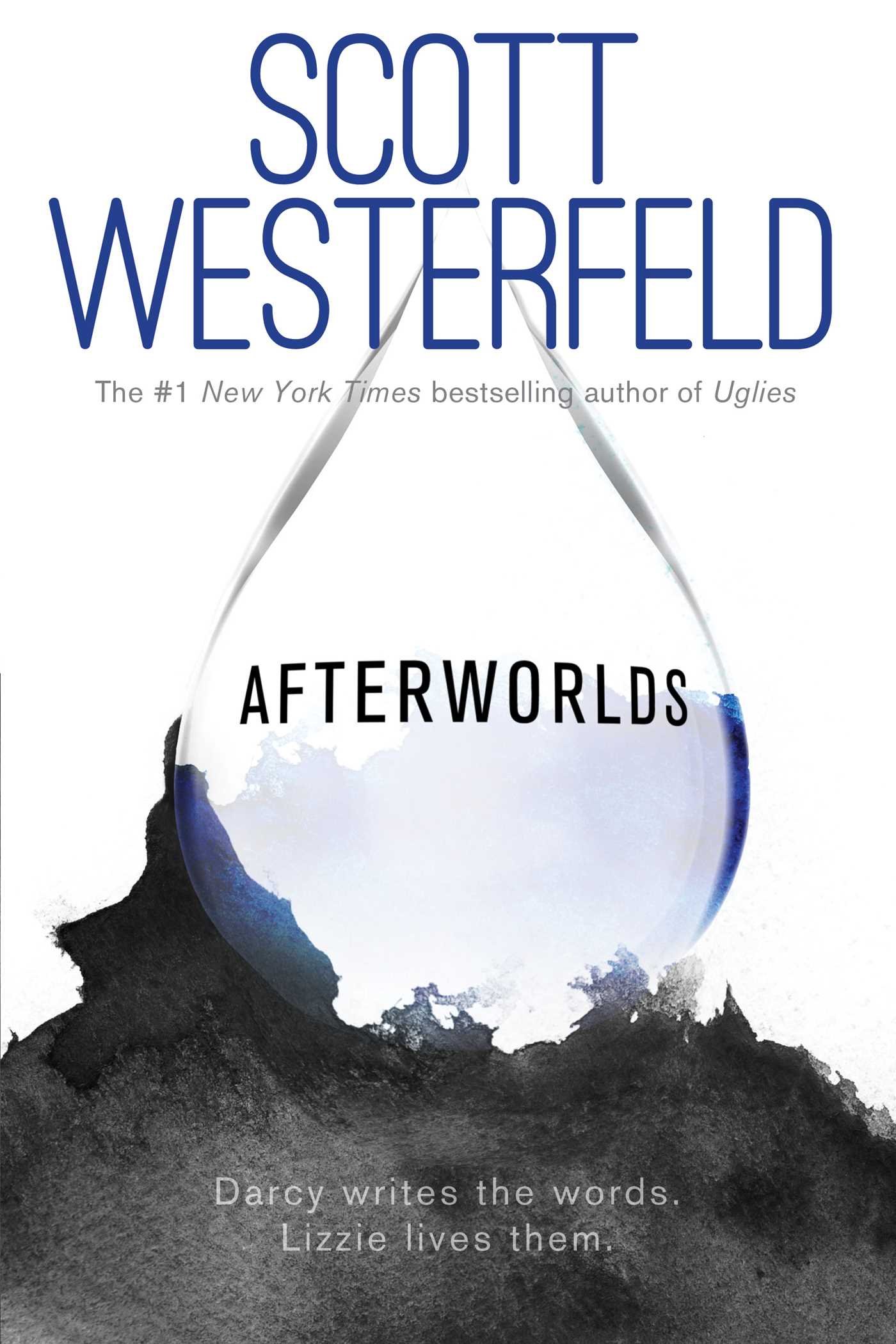
Afterworlds

Afterworlds
(image from its amazon page)
Scott Westerfeld

(Tw for death, terrorism, alchohol, suicide mentions, murder)

Darcy Patel wrote a novel in a month. The experience was surreal, and only got more so as she's rocketed into the publishing world. She puts off college, takes days out for editing, finds and apartment in NYC, and falls in love.
Every other chapter is that of Lizzie, Darcy's protagonist. Like Darcy, she's been thrown into a new, strange world. The difference is, Lizzie's a spirit guide.

*Horrible summary is horrible, but short*

There are 599 pages in this book, and the last time I read something so long without taking two week breaks in between chapters was when I read Blood of Olympus. That was for a series I am deeply invested in and feel the need to finish in three days. This? Scott Westerfeld's ranking on my author list is "male author that does not make me feel the need to watch 'Male Novelist Jokes' every other page". It took me more than three days, but managed to get finished before the 200 page book I'm currently putting off by writing this review.

Westerfeld, also, has totally touched down on Poe's Law with Lizzie's chapters. They're satire- but I couldn't tell until I saw something that said so. If you're reading this before you read the book, you should know that. And I have to say, that makes it pretty good satire.

The non-Lizzie chapters were well written, if a bit slow. I don't know if this was just 'writing is slow, so nothing really important will happen for a while' or what, but it didn't seem as fast-paced. Then again, I may just be desensitized to contemporary. It's not my main genre.

The Lizzie chapters give me, now that I know they're a parody, a sort of vertigo. Yeah, they feel a lot like the cheap paranormal romances I love and hate, but they're different- mostly, the love interest would never be named something more than one syllable. Come on, Yamaraj? That's like three. Point is, they were the egregiously obvious parodies I'd expect. Frankly- and I haven't read most of what Scott Westerfeld writes, so give me a pass here- I thought it was totally in line with what an advanced writer might do, if they aren't writing literary fiction by then.

The characters in both stories left me torn between 'yes much development very' and 'is this even a real person'. It seems kind of contradictory, but that's how it felt. Sometimes they felt flesh and blood, other times paper and ink. It depended on the chapter.

On the romance: You know how for Mardi Gras there'll be those giant king cakes? And if you get the baby doll baked in the cake, it's good luck? Well, that's how reading Darcy's chapters felt. You have your cake, and cake's amazing. Then you take a bite and get a baby. By which I mean two girls. Together! In a way that isn't portrayed as earth-shattering or nonexistent!

Yamaraj as a love interest was, for a satire, a little too distant. I mean, come on Mr. Westerfeld. YA boyfriend are super clingy and get angry if it's so much implied if the protagonist has friends. If you're going to mock a genre, you got to do it right.

~Corinne


Thursday, October 30, 2014

Popular

Popular
Maya Van Wagenen

Trigger warnings for death, drug and alcohol mentions, and bullying

Before the beginning of her eighth grade year, Maya Van Wagenen discovers a book in the back of her closet. It's from the 1950's and is titled Betty Cornell's Teenage Popularity Guide. Being on the lowest rung of the social ladder and not having much to lose, she decides to run a social experiment. Every month she'll obey a chapter from Betty Cornell's book, down to wearing long skirts and girdles. 


Behold my horrid summary of a great book. Instead of cold sociological reviews that try to explain that we're popular because we need to mate (to psychologists- this may surprise you, but Freud wasn't some great insight), it peels back what it's actually like, from a real person's perspective, to try and attain popularity.

I hate to use 'back of the book quotes' language, but the book was poignant. And funny, and weird, and worth a read.

The book isn't completely about the fight for popularity. It talks about the other things that happen in Maya's life, things that ultimately do affect her and how she acts. She learns from her experience. It totally brings me back to 8th grade. I'd been trying to forget that, but okay.

 One issue, though, was that it occasionally pushed the 'unrelated but important' part of non-popularity related things. The part where they gave her little brother "the talk" just seemed sort of unnecessary. But it's kind of hard to tell where to draw the line between frivolous and there for enjoyment. Ah, the troubles of non-fiction.

It's amazing to see what does and doesn't work 60-ish years after the popularity guide was written. Pearls- yay. Cardigans and long skirts- nay.Vaseline on eyelids-maybe. And there's so much detail! She made notes throughout the experiment and was writing the book as it happened, so I guess that explains it, but still. Woo hoo for not being vague.

The point of the book is something that I think is good to know, not just be told. Beauty is on the inside. Okay, so you've heard it a thousand times. But to have actually shown is so much better. I can't try and explain why. Point is, read the book. It's a good book.

Also. Even in non-fiction you can't escape romance. At least it wasn't overwhelming.

(Pathetic review five hours late, but whatever.)
~Corinne 

Saturday, October 18, 2014

Parantnormal, the Second One

Finally thinking I had absolutely nothing to complain about anymore, you sigh in relief. You slip into the lull of safety. But it's not true. I'm here to bristle about all the things I forgot in the last Parantnormal. So here we go.

1. There are only so many ways to spell 'fairy'

Fairy, faery, fairie, fair folk, faerie, faeiry, fayry, fayrie, faiery... There are probably more. There should not be more. With every mutation of the word, my Irish heritage aches. Look, the concept is the same. It doesn't matter how you spell it! But it needs to be readable. It's okay to say 'fairy'. I get it that 'fairy' evokes images of small children's dolls, but it's just how it's spelled. Faery is okay too.

People sometimes shorten it to just "the Fay/Fae/Fai". Fine. That's okay. It sounds more modern that way. However, please, stop acting like the word "fairy" will suddenly destroy your story. If the story is good, it will be fine.

And stop spelling vampire "vampyre". Replacing every "i" with a y doesn't help your case.

2. It could be any mythology in the world... Surprise, it's Greek

Hey, I'm a mythology geek. All mythologies are cool. But Greek mythology is everywhere, from English classes to YA novels. Is it because everyone knows about it? Well, that's your problem. It's not new, it's not fresh and interesting. If you're writing something focused on Greek mythology, try to think about it a little harder. For the plot, does it require being Greek? Or could it just be any pantheon? Really consider it.

If your first thought is that it wouldn't require as much research, or that everyone would know what you're talking about, stop having that thought. All mythologies require research. And most books, based on any mythology, explain the myths they reference. So you could use anything. Really.

Is the story about a child of Zues that controls storms? Is it vital that it's Zues, Zues, and nothing but the Zues? If not, look- other storm gods! Thor, Set, Oya, Taranis... I just googled 'storm gods'. There are plenty more than that.

3. The vampire/werewolf war

Forever wondering about this. Werewolves are German, vampires, well, vampires range, but most people go with the East European ones. But I get it, you want them in the same place. Okay, okay. Why are they fighting?

I swear, it's never explained past 'it's alway's been this way, so...'. There's nothing contradictory about werewolves and vampires. They can be friends. Really. Or do you just need a reason to make your romance forbidden? As always, it would be fine if it was just explained.

4. Failed pack structure, the only female werewolf, and other weird tropes

Writing about any were-blahblahblah society will take research on the species. Wolves are not exempt from this. No matter how much you think you know, you have to look a little farther. First of all- pack hierarchy isn't just "two ton muscle wolf rules all with lady wolf, all other wolves are under them". There's a breeding pair (the alphas), their kids, and maybe their kids' kids. Wouldn't werewolf society be at least close?

The last lady wolf phenomenon is one of the strangest, but also really common (and cissexist). Tell me again why it needs to happen. There's thousands of werewolves, but long ago all the girls died. But-but!- now heroine comes along, and she must hide from society because all the guys want to mate with her. Then Love Interest comes along, teaches harder that not all men are animals (I'm ao hilarious), somehow managing to be the only man that doesn't immediately treat her like breeding stock. But still proves his point.

Another, "the inner wolf" thing. So, there's you. You are the narrator. You are human. Then there's your inner wolf, who's also you, but is a wolf. And talks to you. And when you change, you're still you, not that inner wolf. I'm confused. Why don't you consider that inner wolf to be you, since you are a wolf? What is that inner wolf? If, when you transform, you don't become that inner wolf, what's the point?

She's going to find her mate, she's the Omega, it's- gasp- the Alpha. Who has abs of chiseled smoke. And he's possessive and, honestly, kind of terrifying. Or he rejects her, she mopes, then he comes around and is possessive and terrifying. He uses the dialogue tag "growled" a lot. His name may or may not be a version of "Zack" or "Jack". An ack name.

5. Destinope

This happens in every genre, but it's particularly common in paranormal stuff. Here. I'll even script it out for you. You'll know what I'm talking about.

(MC enters)

MC
Hi, I'm the main character. I'm plain. So plain. My eyes are puplegreenyellowrainbow and people call me a freak because of that. 

(MC wipes away a single tear, though not seeming affected emotionally)

(LOVE INTEREST enters)

LOVE INTEREST
You're special. You have a destiny.

MC
Whhhaaaaaaaaattt. That's so weird and horrible.

(200 pages of nothing)

(Suddenly AUTHOR remembers something)

AUTHOR
Oh, crap. Right.

MC
I have a destiny. I shall do that now.

(40 pages of actual plot)

FIN.


The two hundred page snog sessions could easily go away. It needs to go away. We might like the filler, but not as much as we'd like to hear the plot.

6. The villain is SO hot

Do you need a love triangle but have only one good guy? Do you not want to just write in a new character? Well, do I have a solution for you! Just take your villain, the murderer, the monster, and make him hot! Buy Villain-Good Guy-Heroine Love Triangle now and get a free bottle of Creepiness! Buy now!

Have you considered not doing that.

(Also, did anyone else already finish Blood of Olympus? Because I did. Solangelo YEAH.)
~Corrine