Showing posts with label realistic. Show all posts

Tuesday, December 30, 2014

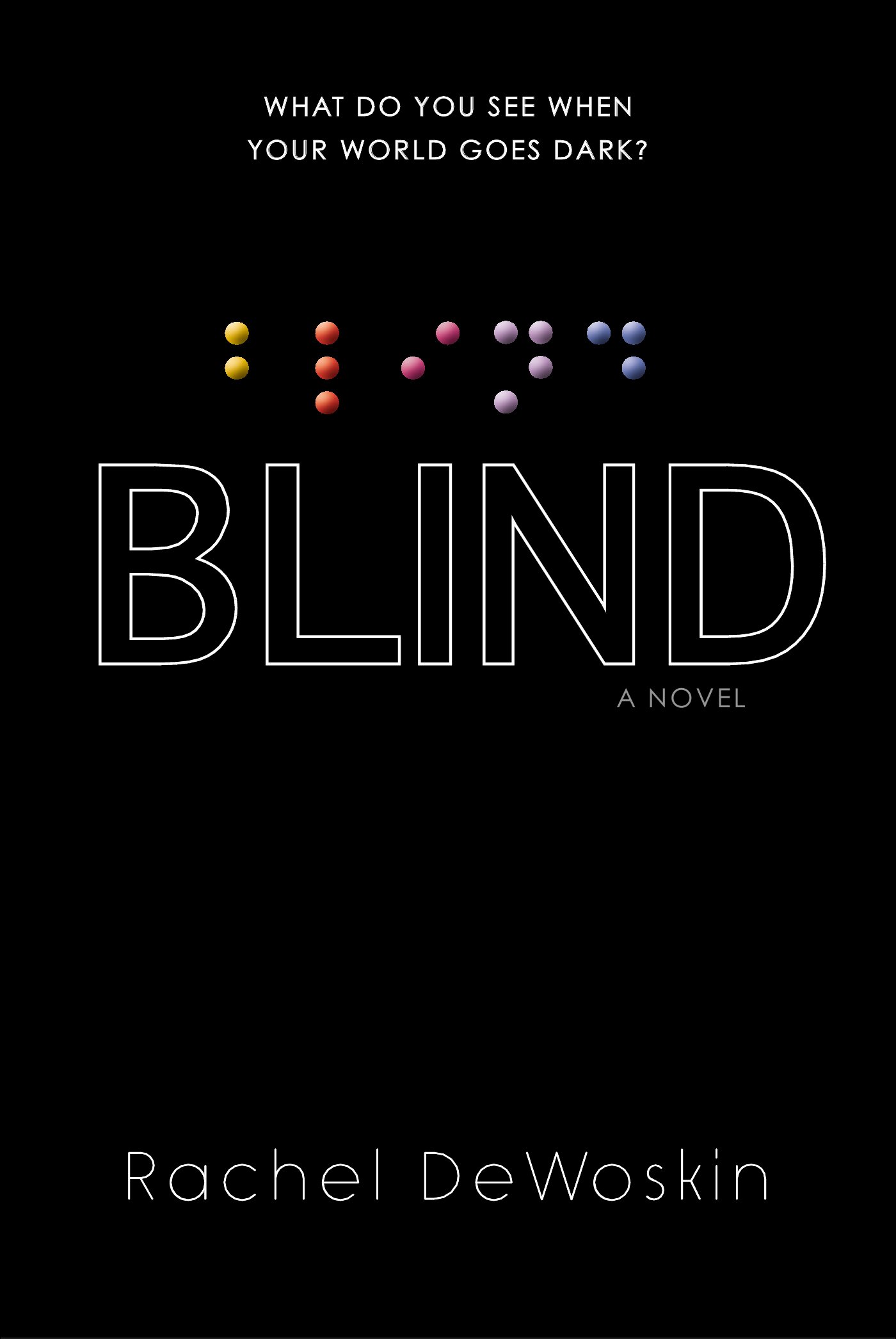
Blind

Blind
Rachel Dewoskin
(Trigger Warnings for the book: Genital mentions, accident, alcohol, fire, suicide, drugs, animal harm/death)

(The following summary is from Goodreads. Look, I'm already behind on reviewing, you want it to take longer?)

When Emma Sasha Silver loses her eyesight in a nightmare accident, she must relearn everything from walking across the street to recognizing her own sisters to imagining colors. One of seven children, Emma used to be the invisible kid, but now it seems everyone is watching her. And just as she's about to start high school and try to recover her friendships and former life, one of her classmates is found dead in an apparent suicide. Fifteen and blind, Emma has to untangle what happened and why - in order to see for herself what makes life worth living.

Okay, this review is split into two parts. The first is a draft of the review when I was only halfway through. The second is now, when the book is done.
Part One
  
Unlike most books on here, I didn't pick up this book because 'wow! That sounds interesting!' (that came later), but instead the creeping feeling that I should. It was on one of my lists, and I was curious. Would I need to take it off the list? Was it even a good book? So, out of curiosity and some vague worries, I picked it up.

The first thing I noticed was backstory. This is kind of alarming, because I usually feed on a diet of trashy mermaid romances where backstory and plot are treating like some kind of plague. And Blind has a lot of backstory. A lot. While the book follows the plot of a murder mystery type scenario, it would be a bit easier to say that it was about Emma's journey from first being blinded to accepting her disability and doing the things she wants to do. This isn't necessarily a bad thing. Actually, the backstory is really interesting. 

It would be nice, however, if the book was a little less expound-y. It wasn't fluff sentences or fluff scenes that were the problem, but things that could take one sentence taking a paragraph instead. That didn't happen too often, but enough to be kind of irritating. Most of them were referring to Zach (more on him later).

The characters were really cool. Logan especially. Instead of being your Typical YA Best Friend (TM), she was actually a person. A real person, whose life didn't revolve a) Emma, or b) helping Emma get together with Love Interest. Even with some of the qualities of the Typical YA Best Friend (TM) like being snarky, or being emotionally strong, she was rounded out and interesting to read.

Emma broke out of the mold of what I except from the Typical YA Heroine (TM). She wasn't defined by something like shyness or stubbornness, but by being her own person. She had opinions and did things, acting like someone who you might know instead of cardboard cut out you might know. Even if she acted a little cynical sometimes, it didn't come off as that aggravating type of cynicism I've gotten way too used to reading, where the narrator sounds like they think they're better than everyone. I liked it.

Even secondary or background characters were individuals. Emma's sisters (and brother) didn't feel like they were there for the 'look, a baby! Oh, don't you love the BABY?! BABY BABY BABY!' factor. I hate that factor. I've mentioned this in previous reviews. I don't think you guys need a recap on it. Anyway, each of Emma's six siblings were unique. At the same time, they acted their age and did their own thing. Other secondary characters, even ones that had like two lines were individuals. Do you know how hard it is to give a character two lines and still make me think 'yep, this is a person. I like this person. Yep.'?! It's really hard. A flower crown to the author.

Zach. No. No Zach, not right now. You know where his paragraph is, don't you, lovelies?

As mentioned in the first paragraph, there was backstory. And the backstory was well written and didn't seem like it was just there to clog things up. However, it did slow down the pace of the novel. The book's only 394 pages. That's not that bad. But it feels so much longer. I'm going to admit, I'm not quite done with it at the writing of this paragraph (December 20).


Part Two

I honestly don't know what happened. The book was still good, but something must have happened at the halfway mark.

First of all, the pacing picked up. Great! I'm going to admit, the slowness of the first half was seriously starting to bother me.

But Emma also suddenly achieved Stage Four Other Girls Syndrome. It just happened. She went from being all cool and original to sounding a lot like the very Typical YA Heroine (TM). Sad. She hit the points of: feminist is a dirty word, all gays are dead, all gays are messed up, and you're a slut. What?! I expect books to start like this, not end like this. Was this some kind of messed up character arch? Le sigh.

Zach's status of Love Interest was dropped, to be picked up by Sebastian. Sebastian was cool, so I didn't mind. At the same time, could Dee being Sebastian's girlfriend have not incited an Other Girls reaction? Please?

(Sorry I missed the 15th. Busy season. Hopefully I can read more books over break and put them in a queue.)
~Corinne

Monday, April 21, 2014

If I Ever Get Out of Here

If I Ever Get Out of Here
(Image from its goodreads page)
Eric Gansworth

If I Ever Get Out of Here is the quintessential coming of age story. Dying dogs and overly-soppy first crush not included.

(The following description is from goodreads. Accept that I'm not always creative.) Lewis "Shoe" Blake is used to the joys and difficulties of life on the Tuscarora Indian reservation in 1975: the joking, the Fireball games, the snow blowing through his roof. What he's not used to is white people being nice to him -- people like George Haddonfield, whose family recently moved to town with the Air Force. As the boys connect through their mutual passion for music, especially the Beatles, Lewis has to lie more and more to hide the reality of his family's poverty from George. He also has to deal with the vicious Evan Reininger, who makes Lewis the special target of his wrath. But when everyone else is on Evan's side, how can he be defeated? And if George finds out the truth about Lewis's home -- will he still be his friend?

I want you to know that I generally don't like coming of age stories. They always have the same themes with the same resolution and the same friggn' copy-paste character over and over and over and over...

Well, If I Ever Get Out of Here was... decent! More than decent! Possibly (much) better than Old Yeller. Though the last one might be because I hate Old Yeller.

I'm going to give a moment to gush. Oh my God. Middle schoolers that talk like middle schoolers instead of third graders. If you didn't know that was a problem, you don't read middle grade fiction. Sevvies swear and have screwed up not-quite-dating stunts. People need to stop pretending like they don't. 

Another misconception this book spectacularly says "No, that's not how this works" to. That idea relates to Maslow's pyramid of human needs. Here, I'm going to show you my version of it.


The thing is that if you lose one of those, everything above it ceases to be a problem. Don't like people? Well, you can't like yourself either, you selfish jerk. Can't eat? You better not be worrying about your family, because that's way higher on my nice triangle thing. Everyone is like, "Yup, that is most certainly human condition. 100000% of people feel this way." But, like with Lord of the Flies, this is not correct.

Back on the book (but relating to the pyramid), Lewis does not have security in money. However, he still cares about everything about the second tier. Which I think is wonderful. Also, it's the plot of the story, but, still, wonderful. I've read a number of "deep" books (written by people who have absolutely no idea about the problem they're writing about) that completely follow Maslow in his thinking. You know what that leads to? Boring, flat characters. 

Okay, the point I'm trying to make is that Lewis was a really cool character to read and I'm glad I read a book that actually kind of gets human condition. I'd almost qualify it for deep-without-the-scare-quotes. Not in a John Green kind of deep way, but Out of the Easy kind of deep, where it's important and deep without a bunch of metaphors and such. I... I'm going to assume you understand what I'm trying to say.

I also loved how the author wrote friendships like friendships actually work. You know, you talk non-stop for three months and then suddenly start avoiding each other for reasons. You're super close on some things, but others are secrets to be kept. Friendship is not a line. It's a bunch of lines. A lovely, liney story.

A comment I have to make because I enjoy ruining otherwise awesome books: I feel like the bullying parts of it were a little unrealistic? I'm not sure, bullying has never really been a problem for me, so I'm probably wrong. But the circumstances leading to how severe everything was were just a little too specific. Like, the individual things that compile into the events make enough sense on their own (Evan is a raging racist, the teachers are raging racists, Evan's a pretty easy target in the scheme of things, etc.). All together, though, it feels kind of overwhelming. 
 
Overall, I loved this book way more than I've shown it. Great book, would definitely recommend it.
Wait, quick! How many coming-of-age books have no romance/crushes for the main character? One. Or, one that I know of. And that one is this one. I find this to be new and exciting territory. Thank you, Mr. Gansworth, for not throwing that COA story trope in just to conform to the horribly overused norm.

~ Corinne

Sunday, December 8, 2013

A Long Walk to Water

A Long Walk to Water
(Image from The Beachwood Reporter)
Linda Sue Park
I'm having trouble trying to summarize the book, so here's the summary from Goodreads:

The New York Times bestseller A Long Walk to Water begins as two stories, told in alternating sections, about two eleven-year-olds in Sudan, a girl in 2008 and a boy in 1985. The girl, Nya, is fetching water from a pond that is two hours’ walk from her home: she makes two trips to the pond every day. The boy, Salva, becomes one of the "lost boys" of Sudan, refugees who cover the African continent on foot as they search for their families and for a safe place to stay. Enduring every hardship from loneliness to attack by armed rebels to contact with killer lions and crocodiles, Salva is a survivor, and his story goes on to intersect with Nya’s in an astonishing and moving way.

Thank you, Goodreads, for solving almost all of my literary troubles. 

I just finished this book this morning, and since I have to compare all YA books with younger-age characters to Diamond Willow, I must say that this is a Diamond Willow. You do not have to be an eleven-year-old to enjoy this book. But you can be. Or maybe not. Who cares? Despite having two protagonists that are eleven for almost all of the book (SPOILER ALERT: Salva actually isn't eleven for all of it, though), it was pretty non-age specific.

The writing style wasn't my usual kind of read, but it still did it's (amazing) job of pulling me into the life of the characters.

The pacing was flawless, and so were the characters. I just wish that we would have heard a little bit more from Nya. I feel like the little snippets about her at the beginning of the chapter could have been just a little longer. 

Just saying, bring a box of tissues for reading. This book can and will make you cry. Sometimes, it's hard to realize that not everyone has running water and a computer to type reviews on while sipping tea. And the realization is hard. But knowing is better than any kind blissful ignorance. You can't try to help if you don't know.

And, ah, there were so many quotable lines in this book. In 112 pages, it had more memorable lines and moments than in most 400 page novels. Alas, I could not highlight anything because it's a library book. 

Okay, I'm sorry that this review was so freakishly short. I mean, five paragraphs of actual review. Very, very short paragraphs, too. Frankly, since this book is based on the childhood of someone (Salva Dut), I feel kind of odd reviewing it. Like, I'm reviewing parts of someone's life. And it was impossible to tell which parts were fact and which were fiction except for Nya's parts. Or even if Salva's narrative was fiction at all.


Interesting fact: This is why I didn't review The Queen of Water by Laura Resau and Maria Virginia Farinango (my computer doesn't allow me-to my knowledge- to make the accent mark in Maria, so sorry for that). That was an awesome book, too. Why did I review this one, then? The world may never know.

Also, this is Dut's organization that builds wells in Sudan- http://www.waterforsouthsudan.org/

So you know. :3

~Corinne

Sunday, May 5, 2013

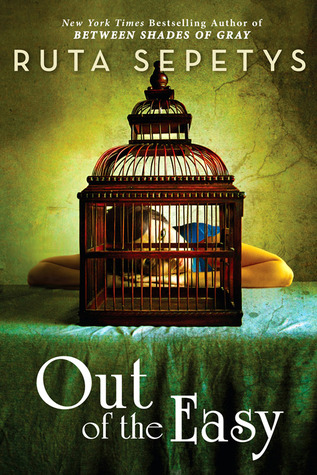
Out of the Easy

OUT OF THE EASY
RUTA SEPETYS

It’s 1950, and as the French Quarter of New Orleans simmers with secrets, seventeen-year-old Josie Moraine is silently stirring a pot of her own. Known among locals as the daughter of a brothel prostitute, Josie wants more out of life than the Big Easy has to offer.
She devises a plan get out, but a mysterious death in the Quarter leaves Josie tangled in an investigation that will challenge her allegiance to her mother, her conscience, and Willie Woodley, the brusque madam on Conti Street. Josie is caught between the dream of an elite college and a clandestine underworld. New Orleans lures her in her quest for truth, dangling temptation at every turn, and escalating to the ultimate test.
With me, historical is almost never an option. I get hung up over inaccuracies, bored with the technology, or frustrated with the way they speak (this is the reason Old Yeller is my bane, besides the dog d- never mind). How did Ruta Sepetys get past this? No, seriously, I'm getting worried that there was some kind of brain control magic in this book.
The point is, this book defied my usual ways. I found the first chapter on Figment (http://figment.com/) and was like 'meh'. Y'know, prostitutes, history, the south... not my thing. Then I went on a trip to a city with more stores than five, and found it. I was like, meh, prostitutes, history, the south, money to burn... Sure, I'll get it.
Best. Book. Decision. In. My. Life.
I fell in love with the characters after probably three sentences. They felt so in-depth, so real. I get annoyed really fast with stencil-characters (more on those later), but there weren't any. It's like Sepetys grabbed someone off the street, stole their personality and every detail of their life and put it on paper. In a good way. Okay, some of them suddenly disappeared, though. That was kind of annoying. Frankie showed up, like, twice. There was so much moooooooooorrreeee!
It's kind of hard to define the plot. That's neutral, not good or bad. It's more like a snippet (a snappet, it was long) of Josie's (the main character) life. And there were so many elements (especially by the end) that it was hard to tell what was going on. And who's dead anymore? I mean, there were a bunch of dead people.
Oh, and then there were the emotions. Sepetys, were you trying to make me cry? Like, three times over? My tear ducts were dry by the end of the book. How do you do that, Sepetys, what are your secrets?!
So, basically what I mean to say is go buy the book. And cry. And laugh. And cry some more. You will not regret it unless you find the topic of prostitutes too hard to swallow.

~ Corinne

Saturday, February 16, 2013

Dreamsleeves

                                                                  DREAMSLEEVES
    BY COLEEN MURTAGH PARATORE

Dreamsleeves follows Aislinn (whose name means 'dream', by the way) during the summer before her thirteenth birthday. Poor and with a drunkard father, her life gets worse as her dad's drinking does, so she tries to save herself with an ideas of hers- Dreamsleeves.
Dreamsleeves are the white part of 'Hello! My name is-" stickers with your dream on them. Her second youngest brother, D, wishes for a little red car. She wishes for her father to stop drinking.
Of course, it doesn't help that her friend, Maizey, chose Sue Ellen, the stuck up rich girl, to be her friend instead of Aislinn, and she wants to woo pretty boy Mike Mancinello. Her mom's going to have a new baby, and her world's falling apart.
The first thing I want to say about this story is that I love the way Coleen Paratore wrote it. The style she wrote it in made it sound much more emotional and realistic, nostalgia shaking you to your core, sadness ripping your heart, and hope blossoming.
Sadly, there were many problems to go with it.
Honestly, I don't mind the 'daddy why do you drink?' sort of plot, and I think that it was done well in this book (though I've never been through such an ordeal, so I may be wrong). What I didn't think was done as well was all the distractions that were thrown in. 
The one-or-two-wah-I-don't-know sided romance was fine, even though I'm not much into the topic (maybe because I'm a lonely, lonely soul). No, it was the my-friend-won't-talk-to-me-and-now-she-likes-my-enemy-better-than-me thing. Yeah, we get it, she's your best friend and you're sad, but we had a real nice plot that doesn't involve griping about it. I've felt that feeling a thousand times, and it wasn't really done right. It's not really jealousy, like Paratore described it as, it's hatred of both people involved. Then it's hatred of yourself. It goes like that, and when I've experienced it, I was never jealous of the person who had "stolen" my friend from me, because no one is jealous of a monster.
"But Cori-" You start. "Don't call me that." I finish. "But, Corinne," You begin again, "That was minor. It didn't distract the story from its plot too much, did it?" No, you're right, it was more of a little nuisance, but it bothered me.
Another distraction I feel horrible about mentioning is just how much she talked about her Roman Catholic faith. No, I don't mind that that was her religion, she could be a cultist for all I care, but it just seemed like all the instances she said it was getting in the way of my enjoyment of the book. It wasn't crucial to the plot and really turned me off.
Now, the characters. I loved most of the background characters, or even the non-narrating main characters (her father, Mikey). Instead of the normal "here is my character okay that's it", they actually had lives. Aislinn's dad collected hubcaps, Maizey was scared not to be accepted, Mikey wasn't just the cute boy, he was the cute boy with a personality. Awesome.
The sad thing? There was one character I had a couple issues with- Aislinn. No, I don't mean because she had flaws, it would be boring if she didn't, but occasionally she just didn't feel as realistic as she should have. At one point, she wet her bed (ew), which was actually when I started noticing the problem. Yes, it happens to some people, but the way she reacted was... not up to par. Instead of the feeling of "I'm acting like a three year old, I feel horrible" it was more of "this isn't my fault". Preteen girls don't do that. Crippling self-doubt and little self-worth is pretty much a tween girl's life. I don't care how strong she's supposed to be, you don't escape that kind of incident without a bit of emotion.
At another point, she finds out that long long ago when the earth was green, her dad threw away one of her favorite stuffed animals. Okay... that's... sad, I guess. But the cry-fest she replied with wasn't right for the subject. It wasn't her kitten, it was a stuffed rabbit. It had been years since it happened. I'm sorry, there was just too much emotion wasted in something so unimportant, something that was hardly mentioned afterwards.
One last thing before I get back to the review, the dreamsleeves themselves. Considering that 'Dreamsleeves' is the title, I was disappointed about how little they were mentioned. They felt like more of a background thing than part of the plot, which I didn't really like.
Overall, though, the book was okay, with realistic characters but a very distracted plot. The emotions were handled well, but not always in the right places. I would recommend it, but only to the more dramatic type.

~ Corinne