Showing posts with label adventure. Show all posts

Wednesday, October 15, 2014

Odin's Ravens

Odin's Ravens
 (image from blackwellpages.com)
K.L. Armstrong and M.A. Marr

Trigger warnings for death and violence

If you want an original summary, I'm afraid you're out of luck. Sorry about that. Here's the one off goodreads:

When thirteen-year-old Matt Thorsen, a modern day descendant of the Norse god Thor, was chosen to represent Thor in an epic battle to prevent the apocalypse he thought he knew how things would play out. Gather the descendants standing in for gods like Loki and Odin, defeat a giant serpent, and save the world. No problem, right?

But the descendants' journey grinds to a halt when their friend and descendant Baldwin is poisoned and killed and Matt, Fen, and Laurie must travel to the Underworld in the hopes of saving him. But that's only their first stop on their journey to reunite the challengers, find Thor's hammer, and stop the apocalypse--a journey filled with enough tooth-and-nail battles and larger-than-life monsters to make Matt a legend in his own right.


A bit of backstory. This is the second book in the Blackwell Pages series. You may feel duped of the review of the first book, but more backstory- I never read the first book. I was so excited to see a book on Norse mythology (and I had heard of the series before) I bought it right then and there in a little airport bookstore. It took about fifteen minutes for me to notice the little yellow banner on the spine that read "Book 2". So thank you, authors, for having this book make sense for all of us that never read the first. That is a talent. A flower crown for the two of you.

I'm sure my readers are getting just a little tired of Norse mythology. I can see you scowling and pointing to the book I just reviewed that was also the second book of a Norse series, raising one unamused eyebrow. To that I'm sorry. Norse mythology is my special interest, and most people in my life probably feel the same way you do. I'll try and keep it short.

Ahhhhh, characters, characters. Loved the characters, and it was multiple POV so we got to read from 4/5 of the important POVs. No Baldwin sections that I remember. Disappointing, I know. Baldwin was the only person who was mildly HAPPY. Not to say that the others were bad, just not Baldwin. Can you guess my favorite character?

There were pictures. That's all you need to know. There were PICTURES.

A few things left me wondering if they were added in for plot convenience. For instance, the bags that Helen gave the kids. Those were just really... Convenient. It took out an element of urgency. Though, this could be swept under the rug by the fact it's MG. I suppose I'm a bit older and than the target audience.

Also, names. I need to decide if I hate or love the names. I mean, I like meaning names, but Helen. As Hela. And Ray and Reyna being Freyr and Freyja. Reyna and Freyja even have the same name meanings. But Ray means 'counsel protection' so, ya'know, we're not completely following a pattern here. I'm so confused. I love and hate the names.

The ending. THE END. HOLY CRAP. Now I need book three, which isn't out yet. It joins the ranks of the three other books that are coming out in 2015, but I want now. Let me tell you, if you feel at all bored (why would you?) while reading, give it until the last few pages. Holy goats.

If there was one problem I had, it was just how white the cast was. No diversity whatsoever. I know, I know, they're the descendants of Norse gods, and most people in Scandinavia are white. However, it's not like they're descendants on both sides (unless they were, in which a case, sorry, missed that), so they could have mixed race. Or something. And it so straight. No, I don't care that it's middle grade, if there can be straight romance, there can be gay romance. One is not more taboo than the other. Copy this over for disability, class, and anything else you can think of that I can't.

And the romance seemed a little unnecessary, too. Or, I think it's unnecessary because I'm worried Laurie will end up in a love triangle. Or, I think it's unnecessary because the chemistry between [Spoilers we have heard on high] Owen and Laurie [sweetly spoilering o'er the plains] is next to nil. Or, I think their chemistry is next to nil because I didn't want romance. It's cause and effect, but I'm not sure which is which.

(This review is a MESS)
~Corinne 

Saturday, August 30, 2014

The Strange Maid

The Strange Maid
(image from its randomhouse.com page)
Tessa Gratton

(Trigger Warnings for the book: Death, alcohol)

(Gif warning for the review)
Signy Valborn climbed the New World Tree when she was seven, looking for Asgard at its top branches. It wasn't there, but the Allfather was. He promised her that if she could solve a riddle, she could join the ranks of the Valkyries. For ten years, Signy has trained to become a Valkyrie, trying to solve her riddle all the while. After running from home to live in the streets of Chicagland, she's not eager to trust Ned Unferth, who claims to know the answer. A Greater Mountain Troll, he claims, will hold the solution. Signy knows she's running out of time. She'll have to trust him.

You know, I was so proud of my summary for The Last Mango (If you're confused, read the review for the predecessor book- then you'll know why I refuse to call it by its real title.). Not sure what went wrong this time.

(image from Pintrest)

Yes, kid, this is a kissing book. There is lots of kissing. You're going to have to get used it. But, hey, there's a plot, too, so get over yourself. Here are the characters who may or may not have kissability:

Signy Valborn- KISSING RATE: HIGH- Finally, a strong female character that isn't a) basically a male character that the author decided should be female, or b) a sex object hiding under the strong female character guise. Signy was a genuinely interesting and cool character to read about. She had almost all the traits you want in a female character, without the chaser of "stage seven Other Girls syndrome" and "magically fails to do anything when Love Interest comes along". A+ main character.

Ned Unferth- KISSING RATE: Lower than Signy, but higher than, say, Sharkman- This is ~Love Interest~. You can tell just by those squiggles that I have a bone to pick. However, I actually have no reason to pick that bone other than Ned's brooding and angst. And the brooding and angst was reasonable too. So, while his character wasn't my favorite, there's no reason to actively hate him. Sad, I know.

Soren Bearstar- KISSING RATE: haha your girlfriend got turned into a goddess everybody point and laugh- I actually liked him better in this book than in the last. Is that weird? He was the MC of the last book. Anyway, he felt more sympathetic and real this time around.

Sharkman- KISSING RATE: Lower than Ned, but higher than Soren- Not important, I know, but for a secondary Love Interest, he probably should have shown up more. Or at least had a personality. Or something.

Baldur- KISSING RATE: Probably still higher than Soren- Okay, I'm only putting him down because I thought he was cool. He only showed up once.

The writing style wasn't too compelling. It wasn't really boring, but it didn't demand my attention. I felt like the narrator could have been a little less detached. However, it was good to see some real emotions from this main character, even if they felt a little bit at a distance. Perhaps third person would fit the style a bit better.

Ooh, ooh the twist near the end! I love end twists! That was pretty darn great. And it made sense, but wasn't obviously going to happen from the beginning. If there were more plot twists like that, reviews would be a happier place.

The balance of action and character development was pretty sweet. Not summer blockbustery, but also not romantic tragedy. Realistic, without one subplot beating out another. Or, well, as realistic as a fantasy book can get. You know. Anyway, veddy veddy good, Ms. Gratton, veddy veddy good.

On the romance: Let's face it, even though I have no practical reason to dislike Ned, I disliked Ned. The air of father figure/mentor and also Love Interest was unnerving. If he stuck as mentor and Sharkman became the Love Interest, I think I'd take it better.

I'm torn whether I liked this book or the last book better. The last one I liked the characters and plot better, but this one didn't have the same problems that bothered me last time.

(Let's face it, if my immune system was better, you guys wouldn't get anything.)
~Corinne

Wednesday, July 30, 2014

In the After

In the After
(image from naomibates.blogspot.com)
Demitria Lunetta

Three years ago, They came. Amy was watching TV while it happened, witnessing what looked like a spacecraft in the city center. Since then, They have attacked every human they find, and they attack to kill. Amy has managed to survive and rescue a toddler she named Baby. They both have to work to survive, staying in Amy's (luckily reinforced) house.

When they are captured and taken to a colony called New Hope, they believe they've reached safety.

But did they?

Sorry if this review is short or just weird, it was a while ago that I read it. By a while I mean like a week. Memory capabilities, amirite?

I'm surprised that I actually liked Baby. Usually small children in YA are used as an 'aww he's so cwute don't you wub dem' factor. Which I hate. They don't have a personality beyond being cute. However, Baby was interesting and individual. She was actually likeable, not just a prop. It's sad that's so exciting, but still.

Amy was very close to your typical YA heroine, but had an original streak enough to keep her interesting. She actually can express concern and do things! Wow! Why is this so hard to grasp in other books? Ms. Lunetta, thank you for allowing emotions and actions to coexist. That is important.

[Please properly dispose of all spoilered goods] Sadly, this is another book demonizing science. I hate this for two reasons- for the love of Athena, science is frickn' beneficial to society, and also the target for a lot of YA is girls. You wanna know what career field girls are being pushed out of? Science. Girls need to learn that science is cool and they can be part of it without being terrible plague-monsters. Girls could cure cancer and get us to Mars if we stopped acting like science was a boys-only club. THIS IS SO IMPORTANT TO ME I AM SCREAMING STOP DEMONIZING SCIENCE. [Spoilanger over]

 The pacing was good, though not much seemed immediately important until later in the book. The subtle details from the beginning being huge later was cool, but if the writing style hadn't immediately caught me I might have gotten bored with the lack of plot progression. As I just said, though- the writing style was (waitforitwaitforit) fan. (Okay, if you read the book you'd get it.)

The Florae (just referred to as They in the beginning) were an awesome example of a monster species. The had strengths and weaknesses, and the weaknesses weren't the usual Achilles heel sort of this. They couldn't hunt in the dark, which doesn't seem like it should be big and original, but it is. There's more, I just feel like discussing more would count as spoilers. Anyhow, great monsters.

The format later on with the flashes between the future and the present were cool. It could get a bit confusing with information revealed in the future and not mentioned in the past, but it wasn't what-is-going-on-why-am-I-in-this-dark-room-with-no-windows confusing.

[Spoilered milk] The ending was kind of... eh. I liked the idea of the Florae being alien or plant based. But the zombie thing? Meh. It just felt like a cop-out. No need for more zombie fiction, I swear. [Shh, it's over now... It's alright]

On the romance. It was kind of strange to me, like they weren't really being romantic but they also weren't in the sort-of-friends category? I kind of wish they were either slightly more romantic so it would feel like boyfriend/girlfriend, or slightly less so it was more close friends. 

(Yes, I know it's short)
~Corinne

Monday, May 26, 2014

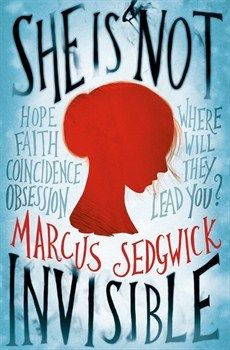
She is not invisible

She is not invisible
(image from its goodreads page)
Marcus Sedgwick

Laureth's father is the famous author Jack Peak. When on a routine trip, he goes missing. He won't answer his phone. Laureth's mother refuses to question it. Laureth might be the only one who will do anything about it. Her father's notebook appears in New York, the only evidence of him after the disappearance. Laureth books a flight to NYC, but there's another a problem. Laureth is blind. With her seven year old brother and her other senses, she'll have to brave the concrete jungle and find her father.

Okay, first thing, I am so glad the author didn't resort to third person because of "wow. much blind. such hard. no colors. :(". A lot of books are extremely visual and it's kind of nice to read one that isn't. There's plenty more senses than sight.

Laureth, as a character, was fab. Beyond fab. She fit strong female character criteria without equating strength with masculinity or a lack of emotion. She's a bit impulsive (lives in London, books a flight to NYC when it's implied her father's there). She's also clever and a little frustrated, but not cynical. Really refreshing as a heroine.

Benjamin was a little harder to judge as a character. I haven't been seven in a long time. Frankly, I have no idea how seven year olds usually act. He seemed a bit older than most seven year olds, but at least that's addressed. He didn't seem to develop much, or at least I didn't notice it.

There were a few things I wish were explained. For instance, the Benjamin Effect. Is it a coincidence or...? It's plot convenient sometimes and inconvenient at others. I feel like it's mentioned enough to get some vague maybe-it's-this.

In concept, the plot is rather dull. Person disappears. MC must go on a quest over a large distance to find them. Self discovery. Secondary characters appear. Person is found in an odd place/way. Yaaaaaaay. However, the execution is what makes a story sparkle. This was executed fantastically. The details made it feel like it was new and shiny. Very nice. *golf clap*

The occasional interception of normal text with passages from their father's notebook was interesting. I kind of expected just some italicized text for excerpts from other things. I liked how it was set-up, like the pages were scanned in. The notes and smiley/frowny faces made the whole thing feel alive.

The story was kind of a slow build. It wasn't blockbuster movie action-packed or anything. It was okay that way, but it didn't push me to finish it as much as I wanted to be pushed. There were a lot of scenes reflecting on things that happened before he disappeared, which gave it a more philosophical than thriller-y feel. Not sure how I felt about that.

On the romance- HA HA PSYCHE THERE IS NO ROMANCE THANK GOD. THANK THOTH THANK FREYJA THANK ANU. I'M FREE. I DIDN'T HAVE TO PUT UP WITH UNNECESSARY ROMANCE OR GAG ON SAPPY DIALOGUE AND KISSES EVERY TWO PARAGRAPHS. YEEEEEEEEEESSSS. HEY, LET'S THANK MAMLAMBO, TOO, JUST 'CUZ.

(Sorry for the outburst- but I think this is the only book I've reviewed without any hint of romance)
~Corinne

Saturday, March 15, 2014

These Broken Stars

These Broken Stars
(Image from squigglesreviews.blogspot.com)
Amie Kaufman & Meagan Spooner

Now for the shortest summary in the history of Yas Read Yas:

Space Titanic.

Yeah. Two words. That's all you need to know about the plot for the rest of the review to make sense.

If you want to understand more, the premise is pretty much that the two MCs- Lilac and Tarver- are on a super expensive and big ship that, as you could expect from the shorter summary, crashes. There's some romantic tensions and 49,998 people died. No bueno.

Okay, that longer-but-still-inadequate description doesn't do the book justice, but anyway! Reviewsies!

I hate to say it, but I'm a total reading hipster. The Fault in Our Stars? Psh, too mainstream (I did read it, though). Twilight? Pshhhh, too horrible. So when I read the cover flap of These Broken Stars, I was kind of like 'Wow, this sounds really ordinary. Hm. Probably cliches and glitter.' But, like Pi, human stupidity is infinitely finite, so I picked it up.

I admit now that perhaps reading this wasn't such a lapse into my stupid side.

There are two main characters, whose POVs the book alternates between. Lilac is a wealthy socialite, Tarver is a jaded low-class soldier. I'm going have to say here that I wasn't particularly fond of Tarver. It wasn't the way he was written or what his actions were, he just wasn't... special, I guess? I mean, I understand that if he was a super speshul snowflake, I wouldn't like him, either. At the same time, though, he didn't do anything that really stood out. His personality didn't stand out. His backstory didn't stand out. And when someone does so little to stand out, they begin to fade off. Other than being a soldier, he sounded a lot like the hundred other male MCs and love interests I've read about. He wasn't bad at all, he just had an air of safety, bubble-wrapping his personality to ensure no one would feel either way about him. 

Lilac, however... I liked Lilac. If there's one cliche that really, really gets me in YA books, it's the 'I'm not like the other girls' thing. As far as I could tell, Lilac was like those mysterious 'other girls'. And that is beautiful. She had grit, but could totally waltz into a ball and be 100% comfortable in a dress. She didn't have to take her time stepping on other girls and screaming, 'Me! I'm important! I'm better them, huh, aren't I?! I drink tea and climb trees! I hate the other girls! Aren't I better than them?!' A heroine whose 'good marks' don't require vilifying others or treating them like the enemy is a heroine who deserves to be read.

Despite Lilac being an above-average character, the plot coasted on 'decent' for most of the book. It was roughly what I expected for the first 75%. Some romantic tension, brief fights about class differences, mortal danger that brings them closer together, lots of angst about their respective pasts, blah blah blah. I wasn't really expecting it to get interesting. But it did! In the last 25%, that is. Which is a bit hard to get to unless you have either a sense of dogged determination or too much free time.

The timing and pace, as I think you can assume from the 75/25 thing up there, wasn't too great. If the (SPOILERS, SKIP AHEAD TO THE NEXT PARAGRAPH TO AVOID THEM) energy being/telepath thing had been introduced halfway, not three-quarters of the way, through the book, I think it would have read a little easier.

I loved the survival side of the story, though. I am 100% fu-fu. The idea of having to go weeks without hot water or tea or anything is, frankly, terrifying. Having nothing to eat but ration bars and grasses is also on the 'nope' side of things.

The non-survival plot elements were pretty fab, too. (SPPPOOOOOIIIILLLLEEEERRRRSSSSS) The whispers (Eee! They didn't unnecessarily capitalize 'whispers'! Yay!) were friggn' cool. Also, I must celebrate the fact that this wasn't suspension of disbelief sci-fi (read: The Future of Us). The authors actually explained why there were visions and whispers and such. The backstories seemed to pretty much center around people the MCs loved dying, which felt a little overdone after a while. However, since the entire book had a big thing about lots people dying, per Titanic tradition, it wasn't too bad like that.

Lastly, the romance. I would like to make it clear that I am not a fan of I-hate-you-I-love-you romances. This one, though, at least deserved to be called 'decent' (at most, it deserved to be called 'Fred'). I understand this doesn't sound like a step up, but it is. The only time the romance actually bothered me or got in the way of the plot was for about twenty pages late in the book. And that's because every other scene was them kissing or referencing shirtlessness. Then the kiss-noshirt-kiss-noshirt thing dies down and we go back to dining on the succulent meat of the plot.

(PS: They totally had sex.)

~Corinne


Sunday, February 23, 2014

Into That Forest

Into That Forest
(Image from its goodreads page)
Louis Nowra


Becky and Hannah are on a family trip (Hannah’s family, anyhow) when a flood catches them off guard. Though Hannah’s parents are killed, the two girls survive and are found by Tasmanian Tigers. The tigers, having lost their pups, take Becky and Hannah in as their own. Soon the girls forget their language and assume the life of a tiger.

Wow. Horrid description I just wrote, but there it is.

Before we start, for the poor, uneducated not Australian readers, I’ll clear up a few things. First of all, the narrator (Hannah) almost always refers to Tasmanian Tigers as just “tigers”. No, this is not the big stripey cat that goes on adventures with Calvin and somesuch. It means Thylacine, which went extinct in 1936. Google Thylacine, it’ll make this book make much more sense. The tigers aren’t described much.

May I also clear up that the main part of this book is set sometime in the early twentieth century. In case that concerns you. It concerns me. I’m very concerned. Extraordinarily so. I was duped into thinking this wasn’t a historical. I am horribly wounded.

Finally, I want you all to know that this kind of pushes the limits of a YA book. The main character at her oldest in the book is 10, but it is... themey. I wouldn't recommend this for anyone
under sixteen.

A couple trigger warnings for the book: Mentions of almost-rape and suicide.

From the warnings onto the review.

Despite being an extremely short book for the number of plot points in it, the timing and execution were wonderful. The plot, even if it seemed kind of run-of-the-mill (child[ren] gets lost in wilderness, they're raised by animals), had an air of originality to it. I'm not exactly an expert on the trope, though, so I actually have no idea how original it really was.

The format was a little odd, since it's being told by Hannah when she's 76. Her grammar is also a bit weird (read: horrible) because she had to relearn her English later on. It can catch you up if you don't learn to ignore it, which usually starts on the third page after picking up the book.

I'm going to have to repeat what I said in an earlier review about a different book. It didn't scream at me that if I put the book down I would die a horrible death at a random time. However, I definitely didn't regret picking it up. There weren't any chapter breaks, which was kind of irritating at first, but I think it actually made it a bit better. If the scenes were actually separated, I'd probably put it down and forget about it, whispering to myself it's okay, you'll remember where you were- really. This is the fate of uncountable books of mine.

So, checking in on what the goodreaders think (I do that occasionally, it's like being transported into a mystical world where everyone is right and wrong at the same time), I'm surprised about what people thought about the emotions in the book. Personally, I'm thinking I'm either really, really, not emotional, or everyone else is wrong. I lean towards the latter. I didn't find the book particularly heartrending. I found the parts where it was supposed to be, and even cried at some of them, but overall? Not really. It was like there was a veil of apathy from the narration, a quick assuring of "But I guess that's just how it happened, its okay."

No matter how unemotional it was, I did feel a connection with the characters. Becky and Hannah were polar opposites at the beginning of the book (Becky was a little lady and Hannah was a little monster), but grow into more interesting, well-developed characters as the story progresses.

I don't usually delve into my social justice warrior side during reviews, but I'm going to bring it up now because I can and no one is going to stop me. I'm not going to pretend to be an expert on Australia and what goes on in it (other than killer trees, octopi that can and will kill you, and something called the frickn' sea wasp), but from any viewpoint the book was less than politically correct. First off, the main character (SPOILERS) almost gets raped, and its treated like, yeah, that happened or whatever. What the heck. Nah, just near sexual assault, nothing wrong here. It's never even mentioned after it happened.

Along with that, the Aboriginal people of Australia are always referred to as "the black fellas". Okay, I get it's the 1930s and whatnot, but really? I don't want to speak for others, but the light they're painted in isn't the greatest, either. And do not say, "It's the 1930s! It was just being realistic for the time period!" You can write historicals without being 100000000% accurate on everything that's being said. Especially when sounding like a semi-decent person is at stake. Unless it's Regency era England. People will find the slightest details ("THE WORD 'SLEAZE' WASN'T IN USE AT THAT TIME OMG DO YOUR RESEARCH") and run with it for those.

*Coughs*

Uh. Ignore that, if you wish. Occasionally I just need to rant.

Ignoring those two issues, the writing style was actually really interesting. It was descriptive enough to know what was going, but not excessive. It was largely simple speak, almost bordering on beige prose. It pulled it off, though. It sounded more genuine than boring.

The ending was bittersweet. It was interesting and a good way to end, saying what happened after the book instead of making the rest of us yell at inanimate objects in hopes they'll tell us their secrets. At the same time, though, I kind of wish there was a little bit more after (SPOILER SPOILER SPOILER) Becky died.

Overall, decent book, would read again if I had to.

~Corinne

Friday, February 14, 2014

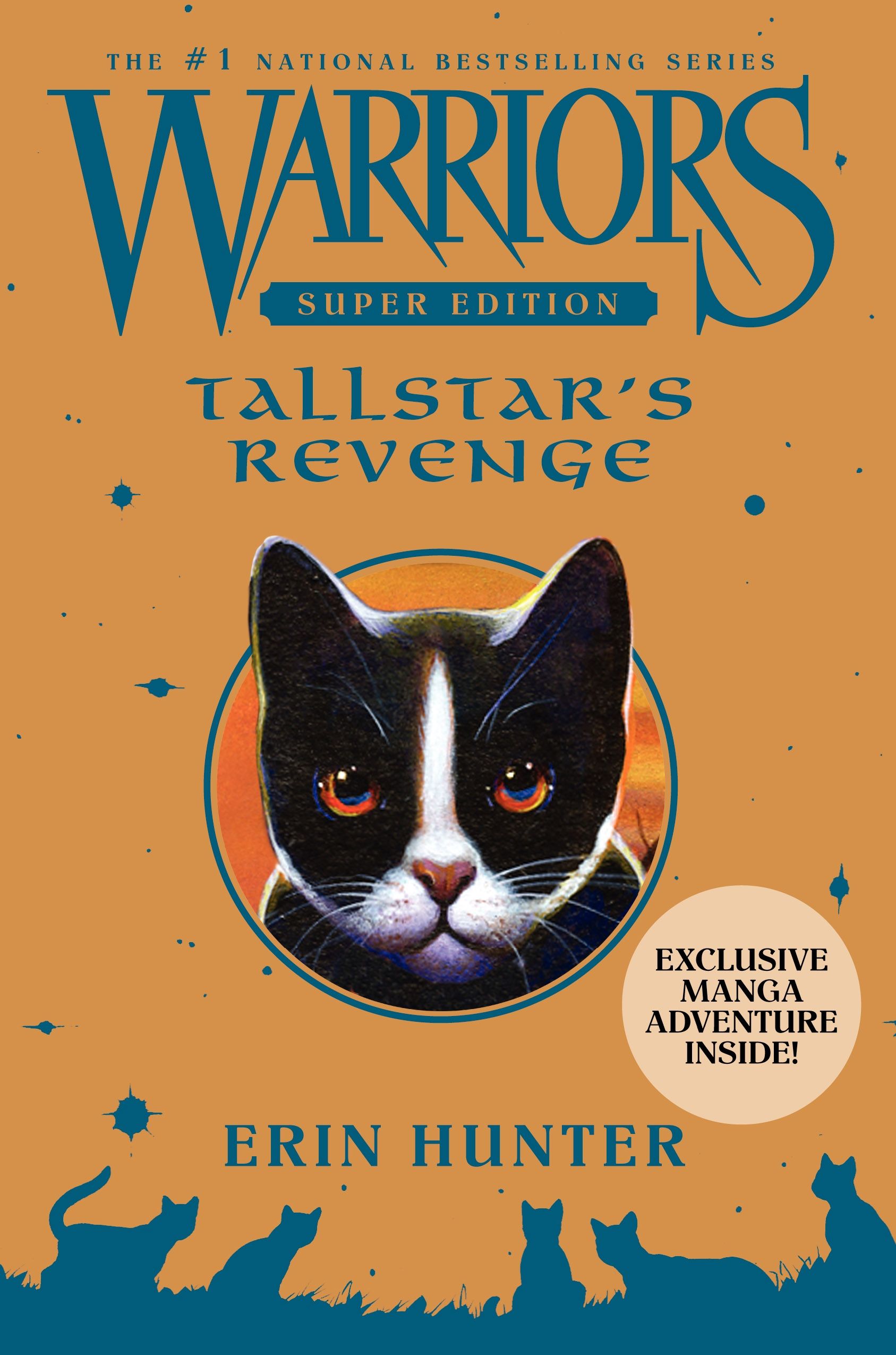
Tallstar's Revenge

Tallstar's Revenge
Erin Hunter
(Image from the Warriors wiki page)
WindClan is divided- tunnelers, who, as the name suggests, dig tunnels for escape routes, shortcuts, and ease of catching prey; and moor runners, who catch prey on the open moor. Tallkit is born into this broken society with his destiny practically sealed. His parents were both tunnelers, and most likely he will be, too. He hates this fate, but when his father is killed, he is determined to take up the duty. But he's denied, and the cat Tallpaw believes killed his father is let off the hook. Tunneling is stopped entirely.

When he gains his warrior name, he notices how little importance he seems to be. Talltail decides to leave the clan, planning to avenge his father. But can his plans ever come to fruition?
 
Since I enjoy lengthy anecdotes that you guys don't care about, I'm going to tell you why I picked up this book.

I started reading the Warriors book when I was really young- way too young to understand what was going on and also too young to understand why a book wouldn't have pictures. I kept reading the series for years. This past year, however, I called it quits. Doveykins and co. were rampant Sues (actually, maybe they weren't, I haven't reread them yet to check) and things were getting predictable.

So when I found this at the library, I figured it would be a decent reminder of why I might have read the series in the first place, and if it wasn't, hey, I could still read it for the laughs. 
I was pleasantly surprised by the reason I actually kept reading.

Talltail (Okay, Tallstar, but Talltail is what he's called for most of the book, so why change that?) was by no stretch a Stu, however angsty he may have been. For a large part of the book he's described as having a "burning rage" and that gets in the way of true development, but it gets better as the story progresses. He ends as a loveable, well-developed character.

I was amazed how well things in this book were tied in with other Warriors books. The main plot, maybe not so, but there were a lot of fun details to catch. There were also a myriad of technical errors (Appledawn changed gender within a page of the last use of pronouns), though that's become pretty much the norm in the books.

The plot was... unpredictable, almost? I don't know. In hindsight, I feel like I should have expected the find-yourself journey, because those seem pretty popular in Super Editions (Firestar's Quest, briefly in Crookedstar's Promise, I think). However, I was actually fairly surprised when Talltail decided to hunt down Sparrow. In fact, I didn't expect a number of things. It was a good change from my usual.
Got to say, this book wasn't emotional (for the reader, not the cats) for such a long time, it was almost disappointing. It almost got me thinking that despite the cast of snowflakes, it wasn't going to have power. Then at the end... oh, just you wait. 
 The execution and timing were great. Of course, the book was also extremely long, but why else would they call it a super edition?

Oh my deities, if I was still in the Warriors fandom, I'd so be squealing over how cute the friendship between Jake and Talltail was. However, as a reviewer, I must keep calm and collected. Though if I wasn't a reviewer, I feel you should know that I'd being cooing how beautiful they are together. And if I was in the fandom again, which I'm not, I would be squeeing about how, though it wasn't quite realistic that they became besties in a matter of days, they made perfect friends. You should also know that, say I was still a fan, I would be sad that they didn't meet up again later on. But I'm not a fan, even a little, so I'll say it in reviewing terms- it was okay.

Because there was no romance in this book, I'm allowed to mention it before the end. In most of the other books, there was unnecessary romance. (SPOILER: What's with Dovewing and Bumblestripe?) However, this book didn't have any. I took a moment to be surprised, then realized that, well, Tallstar didn't have any kits in the books, did he? So a thanks to Ms. Hunter for not throwing in lovely-dovely love as a trim.

Actually, I'm glad there weren't too many subplots. I hate it when books get a bunch of subplots that get in the way of the main plot. This was a perfect balance, not too simple, not to complicated. The Goldilocks zone of plots.

Ooh, two posts in two days. Lucky, lucky.
~Corinne

Sunday, January 12, 2014

The Lost Sun

The Lost Sun
(Image from usatoday)
Tessa Gratton

In a world where the Norse Gods are real, it usually pays to be a beserker. Unless, of course, you're Soren Bearskin, son of a previously acclaimed beserker that went insane and killed thirteen people and had to be shot down by a SWAT team. 

His life seems to be going up when he meets Astrid Glyn, a seethkoma who's famous prophetess mother went missing. But his celebrations end when Baldur, the much-loved god of light, fails to rise. Now Soren and Astrid must find the missing god, and confront their own problems along the way.

I vaguely enjoy the summary I just wrote. Isn't it beautiful? However, beauty can't last, so onto the (extremely unorganized) review.

You know that one person you really want to like, but have these little habits that just bother you so much? This book was that person for me.

First of all, I love the plot. I could roll around in the plot all day while giggling like a maniac. A road trip to save a god? Awesome. Beserkers and prophetesses? Heaven Valhalla. Journey of self discovery? I love you.

And the plot was executed so beautifully. It was well-timed and well-written. The pacing was more beautiful than that summary I'm still fairly proud of. In fact, if that was the only way I judged this book, I would probably be shoving it in your face screaming, "READ IT READ IT READ IT!"

And the world? So fabulous. Oh so fabulous. Perhaps not the best built one (Does everything have to revolve around the gods? I mean, a lot of stuff being dedicated to them make sense, but absolutely everything?), but still amazing and great and fabulous and [adjective with a positive connotation]. This may have something to do with the fact that I'm obsessed with most mythologies and folktales, but ignore that. My bias can be ignored.

Wait, no it can't. Because I've read Prose Edda, and I know all you slip-ups and stare into your soul.

A lot of the stories referenced/mentioned in this book were changed for no apparent reason. A couple are reasonable (Freyja magically becoming the goddess of magic, when that's more of Odin's thing, makes sense because too many people with Odin as their patron would be weird). But for the most part, it wouldn't be significant if they were told correctly. For instance, Baldur is not the sun. You may think he's the sun, but he's not. Trust me. I wouldn't lie to you, I'm not a Lokiskin. Sol is the sun. Baldur is the god of light and innocence and other awesome stuff like that, but not the sun. Since the reason the book is called The Lost Sun is because Baldur is lost, its title must be changed. "Sun" has become a random noun. We may replace it with any other noun.

Okay, while that bothers me, it isn't the only mythological mistake in The Lost Paperclip.  The Fenris wolf was the brother (or sister, maybe) of Jormungand with the same parents. Loki and Angurboda. At no point did they turn into a young girl, but illusion magic does exist in all unreality, so whatever.

Jormungand was cut out of no one's stomach.

It wasn't Baldur's mother that refused to weep for him, it was random giantess lady-who-may-have-been-Loki, Thokk. No one but Baldur and Hodr was murdered in that story.

See? Pointless things that could easily be changed. The only reason I even bother mention is to a) say that The Lost Skeleton is by no means a mythology textbook, and b) to point out one of the habits of the person-book mentioned in paragraph one of the actual review.

The characters, even, no, especially Baldur-who-is-not-the-sun, were interesting and unique little ducklings. They had their own drives and personalities and while Soren was basically a steel wall of seriousness, were still extremely cool and fun to read. It makes sense that Soren is the wall he is, I guess- after all, he could potentially kill someone, and that, kiddies, is something to be serious about. Oh, fun fact: the word "beserker" comes from the words "bear skin". I SEE WHAT YOU DID THERE, AUTHOR LADY.

And yes, I enjoyed Baldur's character veddy much. I have no idea why. He was just cool.

Names came to be another of the irritating-habits-no-one-but-me-cares-about. Why did all of the names of things have to be changed? Canadia (although that explains why they're Canadians, not Canadans), Montania? Anglish and New Spain? Why do these names have to be different? Does it matter? Do you like the idea that it takes me a second or two to understand certain things? These are questions that must be answered.

In more, better news that once again only I care about, I could find a lot of queer subtext in this book. Not actual text, but I have my dreams (JUST YOU WAIT UNTIL THE NEXT REVIEW). Of course, this is me just throwing out things that I noticed, so this entire paragraph may be ignored. 

While the style was usually pretty great, the wording could get a little odd. 

Also, I've noticed that out of the 22 books I've reviewed (counting this one), 17 have been in first-person narrative. That comes up to 77%. What could this mean? More unimportant sentences when I should be reviewing. That's what it means.

The romance was decent. Maybe not the best, but definitely not gag-worthy.

More useless text (maybe I should just, like, change the text color of useless stuff to green so you know to ignore it): I've noticed that in novels with a male protagonist, the romance is a lot more touchy-touchy. They want to hug and cradle and otherwise hold their love interest. With female protagonists, it's more emotional stuff that they're concerned about. Just pointing that out.

And since romance is almost always the thing I end with, you all know it's good-bye time. The book was decent with its habits. I might read the next book if I saw it in the library or something, but wouldn't purposefully seek it out.

~Corinne

Sunday, April 7, 2013

Going Bovine

GOING BOVINE
LIBBA BRAY


All 16-year-old Cameron wants is to get through high school—and life in general—with a minimum of effort. It’s not a lot to ask. But that’s before he’s given some bad news: he’s sick and he’s going to die. Which totally sucks. Hope arrives in the winged form of Dulcie, a loopy punk angel/possible hallucination with a bad sugar habit. She tells Cam there is a cure—if he’s willing to go in search of it. With the help of a death-obsessed, video-gaming dwarf and a yard gnome, Cam sets off on the mother of all road trips through a twisted America into the heart of what matters most.

So, as all reviews start, I'm herping and derping around the library. I usually stay in the 'New Books' part, but today is special. Well, it's not special. I just ended up in the plain YA section. And I found this. And now I'll stop talking and start reviewing.
So, even if it wasn't from the section I usually look at, there's a lot to say about this book.
The plot seems a little strange, I know. Someone dying of Mad Cow disease traveling space and time with a yard gnome who claims to be a Norse god and a dwarf with an angel with pink hair in the mix. Somehow, though, Libba Bray made it work. The entire thing flowed together like it was simply meant to be, like chocolate and peanut-butter. Even though the book was long and had a tendency to sidetrack, it all came together so you'd forget you were reading, not watching the characters go along.
The descriptions were, even if they went a hair longer than they needed to be, were well-handled.
The characters, while they were all unique and written in at the best time for understanding the story, didn't seem to develop as much as I was expecting, though. Really, the only character who seemed to change a substantial amount was Dulcie, but she was only one of many could-be-explored characters. Though it's kind of disappointing when I look back on it, I doubt I really noticed anything while reading. So as long as you don't over-think things like I do, you should be good.
So, to sum it up, it was a good book with its only fault being hardly noticeable while you read. I'd recommend it. 

Sorry for the wait. It's been a long time.
~ Corinne