Showing posts with label Contemporary. Show all posts

Tuesday, December 30, 2014

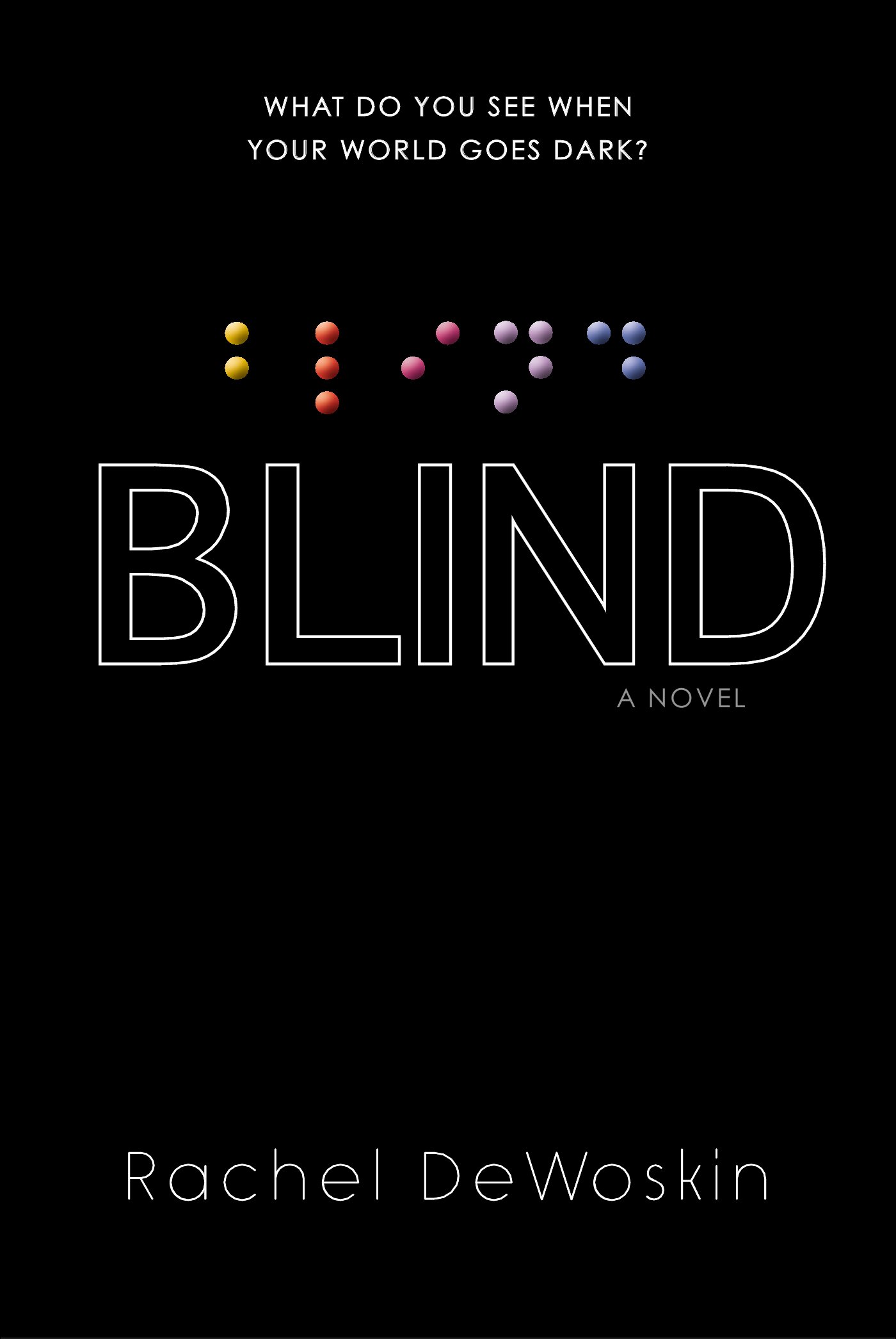
Blind

Blind
Rachel Dewoskin
(Trigger Warnings for the book: Genital mentions, accident, alcohol, fire, suicide, drugs, animal harm/death)

(The following summary is from Goodreads. Look, I'm already behind on reviewing, you want it to take longer?)

When Emma Sasha Silver loses her eyesight in a nightmare accident, she must relearn everything from walking across the street to recognizing her own sisters to imagining colors. One of seven children, Emma used to be the invisible kid, but now it seems everyone is watching her. And just as she's about to start high school and try to recover her friendships and former life, one of her classmates is found dead in an apparent suicide. Fifteen and blind, Emma has to untangle what happened and why - in order to see for herself what makes life worth living.

Okay, this review is split into two parts. The first is a draft of the review when I was only halfway through. The second is now, when the book is done.
Part One
  
Unlike most books on here, I didn't pick up this book because 'wow! That sounds interesting!' (that came later), but instead the creeping feeling that I should. It was on one of my lists, and I was curious. Would I need to take it off the list? Was it even a good book? So, out of curiosity and some vague worries, I picked it up.

The first thing I noticed was backstory. This is kind of alarming, because I usually feed on a diet of trashy mermaid romances where backstory and plot are treating like some kind of plague. And Blind has a lot of backstory. A lot. While the book follows the plot of a murder mystery type scenario, it would be a bit easier to say that it was about Emma's journey from first being blinded to accepting her disability and doing the things she wants to do. This isn't necessarily a bad thing. Actually, the backstory is really interesting. 

It would be nice, however, if the book was a little less expound-y. It wasn't fluff sentences or fluff scenes that were the problem, but things that could take one sentence taking a paragraph instead. That didn't happen too often, but enough to be kind of irritating. Most of them were referring to Zach (more on him later).

The characters were really cool. Logan especially. Instead of being your Typical YA Best Friend (TM), she was actually a person. A real person, whose life didn't revolve a) Emma, or b) helping Emma get together with Love Interest. Even with some of the qualities of the Typical YA Best Friend (TM) like being snarky, or being emotionally strong, she was rounded out and interesting to read.

Emma broke out of the mold of what I except from the Typical YA Heroine (TM). She wasn't defined by something like shyness or stubbornness, but by being her own person. She had opinions and did things, acting like someone who you might know instead of cardboard cut out you might know. Even if she acted a little cynical sometimes, it didn't come off as that aggravating type of cynicism I've gotten way too used to reading, where the narrator sounds like they think they're better than everyone. I liked it.

Even secondary or background characters were individuals. Emma's sisters (and brother) didn't feel like they were there for the 'look, a baby! Oh, don't you love the BABY?! BABY BABY BABY!' factor. I hate that factor. I've mentioned this in previous reviews. I don't think you guys need a recap on it. Anyway, each of Emma's six siblings were unique. At the same time, they acted their age and did their own thing. Other secondary characters, even ones that had like two lines were individuals. Do you know how hard it is to give a character two lines and still make me think 'yep, this is a person. I like this person. Yep.'?! It's really hard. A flower crown to the author.

Zach. No. No Zach, not right now. You know where his paragraph is, don't you, lovelies?

As mentioned in the first paragraph, there was backstory. And the backstory was well written and didn't seem like it was just there to clog things up. However, it did slow down the pace of the novel. The book's only 394 pages. That's not that bad. But it feels so much longer. I'm going to admit, I'm not quite done with it at the writing of this paragraph (December 20).


Part Two

I honestly don't know what happened. The book was still good, but something must have happened at the halfway mark.

First of all, the pacing picked up. Great! I'm going to admit, the slowness of the first half was seriously starting to bother me.

But Emma also suddenly achieved Stage Four Other Girls Syndrome. It just happened. She went from being all cool and original to sounding a lot like the very Typical YA Heroine (TM). Sad. She hit the points of: feminist is a dirty word, all gays are dead, all gays are messed up, and you're a slut. What?! I expect books to start like this, not end like this. Was this some kind of messed up character arch? Le sigh.

Zach's status of Love Interest was dropped, to be picked up by Sebastian. Sebastian was cool, so I didn't mind. At the same time, could Dee being Sebastian's girlfriend have not incited an Other Girls reaction? Please?

(Sorry I missed the 15th. Busy season. Hopefully I can read more books over break and put them in a queue.)
~Corinne

Thursday, October 30, 2014

Popular

Popular
Maya Van Wagenen

Trigger warnings for death, drug and alcohol mentions, and bullying

Before the beginning of her eighth grade year, Maya Van Wagenen discovers a book in the back of her closet. It's from the 1950's and is titled Betty Cornell's Teenage Popularity Guide. Being on the lowest rung of the social ladder and not having much to lose, she decides to run a social experiment. Every month she'll obey a chapter from Betty Cornell's book, down to wearing long skirts and girdles. 


Behold my horrid summary of a great book. Instead of cold sociological reviews that try to explain that we're popular because we need to mate (to psychologists- this may surprise you, but Freud wasn't some great insight), it peels back what it's actually like, from a real person's perspective, to try and attain popularity.

I hate to use 'back of the book quotes' language, but the book was poignant. And funny, and weird, and worth a read.

The book isn't completely about the fight for popularity. It talks about the other things that happen in Maya's life, things that ultimately do affect her and how she acts. She learns from her experience. It totally brings me back to 8th grade. I'd been trying to forget that, but okay.

 One issue, though, was that it occasionally pushed the 'unrelated but important' part of non-popularity related things. The part where they gave her little brother "the talk" just seemed sort of unnecessary. But it's kind of hard to tell where to draw the line between frivolous and there for enjoyment. Ah, the troubles of non-fiction.

It's amazing to see what does and doesn't work 60-ish years after the popularity guide was written. Pearls- yay. Cardigans and long skirts- nay.Vaseline on eyelids-maybe. And there's so much detail! She made notes throughout the experiment and was writing the book as it happened, so I guess that explains it, but still. Woo hoo for not being vague.

The point of the book is something that I think is good to know, not just be told. Beauty is on the inside. Okay, so you've heard it a thousand times. But to have actually shown is so much better. I can't try and explain why. Point is, read the book. It's a good book.

Also. Even in non-fiction you can't escape romance. At least it wasn't overwhelming.

(Pathetic review five hours late, but whatever.)
~Corinne 

Friday, August 15, 2014

Say What You Will

Say What You Will
(Image from bubblegumpost.com)
Cammie McGovern

Trigger Warnings for the book: Death mentions, disease, alcohol use, drug mentions

Born with cerebral palsy, Amy can't walk without a walker, talk without a voice box, or even fully control her facial expressions. Plagued by obsessive-compulsive disorder, Matthew is consumed with repeated thoughts, neurotic rituals, and crippling fear. Both in desperate need of someone to help them reach out to the world, Amy and Matthew are more alike than either ever realized.

When Amy decides to hire student aides to help her in her senior year at Coral Hills High School, these two teens are thrust into each other's lives. As they begin to spend time with each other, what started as a blossoming friendship eventually grows into something neither expected.


Yes, I ripped the description off Amazon. Sue me, I hate trying to summarize contemporary books. Anyway, this book... *sigh, runs hand through hair* How to describe this book...

Let me start by saying I did not hate this book. I also didn't love it. But I can't say my opinion was neutral, either. There were a bunch of high points, but also some low points, and instead of cancelling each other out, it just dizzied my opinion on the book. So I'll section this review into two parts- positive and negative.

Positive
(I wish I could make that rainbow and sparkly, but, alas, I don't know how to do a glitter effect. Maybe another time.)

 Point One. This book was honest. I saw it compared to The Fault in Our Stars and just kinda... Well, the Fault in Our Stars isn't an honest book. It's pretty romanticized (listen as the nerdfighters gasp and plot their revenge against me). Say What You Will had an air of, "This is just how it is. There's no need to doll up the truth." Which, I've gotta say, I love. Thank you, Ms. McGovern, for giving the book the most genuine feel I've ever read.

Point Two. Stories about disabilities that aren't completely, "Look, people with disabilities! Existing! So brave!" are hard to come by. Inspiration may be nice, but there's no need to used disabled people as your pawn in the inspiration game. Another thank you to the author for not making Amy an object to gawk at. Amy (and Matthew) went way beyond the feel-good-story characters I expected.

Point Three. Not only were the characters people, they were good people! Interesting people! Honestly, if at the end of the book there was a little note that said "Surprise! There is no Cammie McGovern! This is a joint autobiography!" I might not actually be surprised. They sounded so real.

Point Four. Frrriiiieeeennnddddshhhhiiiiiipppppp. Instalove and enemies-turned-lovers are my two least favorite kinds of romance. Friendship based love is totally the best. It's realistic and warm and fuzzy without the lustity-lust-lust atmosphere I get from love at first sight, or basically anything where the Love Interest(TM)'s first description is that he/she was so hot that you'd melt looking at them.

Point Five. The romance was pretty darn great too. It didn't morph their relationship into something weird and unrecognizable. [Congratulations! It's a spoiler!] And then, when sex did come up, it wasn't an immediate take-off-your-clothes-we're-not-even-gonna-think-about-it thing. Why does that keep happening? I have no idea. But it's nice to get a break from it. [The spoiler disappeared, never to be seen again] Okay, I'm gonna have to say, it was pretty cute. There. You heard it from me, folks.

Negative

Sadly, we'd have to get to this eventually. Even with all the good stuff there was:

Negative Point One. [Wake me up... when the spoilers end] The baby. Yup. Third novel on here with a useless baby. It's not that it wasn't important to the plot, really, it's just there are so many better plot points that could have been used. I don't want another novel with the main girl getting pregnant. I don't need that. No one needs that. It's getting old, people. I'm also absolutely terrified that the book I'm reading now is going to do that. At least in this book the baby's put up for adoption. We really, really don't need another BABY. BABY ALL. ONLY BABY NOW. BABY LIFE. BABY BABY BABY. Story. [Goodbye, spoiler! We'll miss you! Write home!]

Negative Point Two. Near the end, the book went from awesome to a bit weird. Like the author wasn't sure what else to day after [Yeah, one more spoiler.] Amy went missing. [I knew your spoiler. It was a good man.] It became harder to really feel for the situation.

Negative Point Three. More of *sigh, flop onto the couch* The Other Girls. And here's the confusing part. Amy had a more mild case of The Other Girls syndrome than Matthew. She at least accepted them like people. Matthew went so far as slut shaming and acting like Amy was the only decent girl. That's, like, a stage four Other Girls case. All I can say is "no".


(If you total it up, it's two points. A mediocre book is zero points. So, uh, above average, I guess?)
~Corinne 

Friday, August 1, 2014

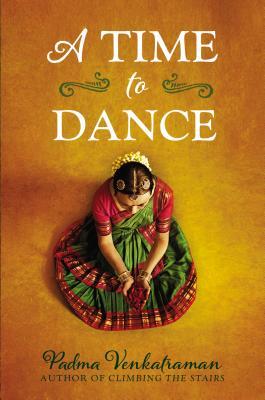
A Time to Dance

A Time to Dance
(image from its goodreads page)
Padma Venkatraman

(Trigger warnings for the book- amputation, injury, blood, death)

Veda is a dance prodigy, used to applause and attention. After an accident, however, her dreams are shattered with her leg. A below-the-knee amputation has to be preformed, making Veda's once graceful movements slow and clumsy. But instead of giving up, she tenaciously chases her dream, entering beginner dance classes to relearn balance and flexibility. There she meets Govinda, a young dance teacher who believes in dance as a spiritual pursuit. With him, Veda's view of the world changes, and she finds what dancing means to her.

*Reads my summary* *Reads the book's summary* *Realizes I sound like a 6th grader when told to write about something 'in their own words'* *Laughs, but nervously*

Anyway, this book had the perfect set up to be the bane of my existence. A novel in verse (Is it poetry? Is it a novel? WHO KNOWS.), spiritual, inspirational... I mean, nearly everything I don't like was there. Yet this book was so good.

Veda was such a great character. It was amazing, seeing the world through her eyes. Despite one of the reasons I don't like novels in verse being they suck the life out of characters, she warded off the voice-vampire like a PRO. I think we need more Vedas in fiction.

The descriptions were A++. Even the kind of weird or disturbing ones, such as the phantom limb sensation or the time at the beginning of the book when Veda can't find her crutches and collapses in the bathroom. Despite accentuating that kind of thing, it made the beautiful scenes ten times more beautiful. It was great.

I kind of wish there was more just about dance at the end, because Govinda sorta took over for a bit. The dance scenes that were near the end were fab, though.

The spiritual bits, which usually just make me feel weird about myself, were actually pretty darn great to read. Instead of having a preachy tone of, "This should be you. This character is so religious. They're getting the nice afterlife. You? You're getting a second-rate death. Hah." it didn't push its boundaries as fiction. It felt more comforting than imposing. Remember, if you're going to write a book with spiritual themes, TAKE AFTER THIS BOOK.

Ah, romance. The way romance was handled never dipped into "intolerable" zones.  It always stayed tolerable or better. This sounds like a half insult. It's actually a full compliment. Her crush on Jim brought out a really realistic side. Because, like, at least half of readers out there have a crush they really regret now. You think I'm not talking to you. I am. When Govinda showed, he was perfect love interest material. He's cool. It's nice to not be stuck with 'dark and brooding lovey dovey interest winterest'. Very, very nice.

I wholeheartedly recommend this book to anyone.

(Thank Squid for the 31st, or you guys might not have gotten this)
~Corinne

Tuesday, July 15, 2014

The Milk of Birds

The Milk of Birds
(image from its goodreads page)
Sylvia Whitman

Nawra, a refugee displaced by the Janjaweed's destruction, lives in Darfur, Sudan. K.C., an American teenager with a hatred of reading and writing, lives in Richmond, Virginia. Surely sisterhood can't reach over such a divide. But after K.C. is signed up for a nonprofit called Save the Girls, she is put in contact with Nawra. Through letters they bond, and over time they form a friendship no distance can conquer.

Okay, I just wrote possibly the cheesiest sounding summary ever. Okay.

The book was less cheesy. Its writing style was beautiful, littered with the letters between the two. The two points of views were distinct and both very nice. Actually, scrapping the word 'nice'. The views, the characters, the story was amazing.

K.C. is the kind of character I want to see more of. Instead of severe 'not like the other girls' syndrome and a thing for tea, her grades are subpar and her relationship with others in her school is realistic. Wooooooooooooo! I mean, I like tea and all, but it's nice to get away from the sniffy Manic Pixie Dream Girls every once and a while.

Nawra was a great character, but with one flaw. It's that whole no-contractions-poetic-speech thing again. However, she was still a fab PoV character. Love her.

The plot itself was kind of unclear. I'm not sure if there was a goal that was supposed to be reached or what. There was, however, a good amount of character development, so I'll assume it was a SOL (Snippet of Life). Okay, K.C. got a good amount of character development. I'm not certain how much of that attention should have been focused on Nawra.

Okay, I feel bad, because all of my grievances seem to be focused on Nawra, but I had one more thing behind the spoiler brackets. [Just ignore the rest of this (sarcastic after the first sentence) paragraph] Why is it that I have found two books in a very recent span of time that portray the teen character having a baby as super positive? Like, WOW, a BABY. HOW COULD YOUR LIFE GET BETTER than a BABY. BABYS ARE THE BEST. BABYS FIX EVERYTHING. Step aside, future, we've got a BABY. [*heavy, spoilerific breathing over*] Yeah, no, I don't like that. Stop.

Ignoring that, I liked the details that were in the story. The sayings, the details on food and culture. Am I the only one who really likes scenes with characters eating? It just brings me this sense that they're real people. I could be the only one who thinks that, though.

*Long sigh* Okay, I have exactly one more complaint. Just one. IT'LL BE IT, I SWEAR. It's the kind of white savior complex going on. Like the idea that K.C. is rescuing Nawra by being from America and having money. I didn't word it right, but it makes sense in context of the book, trust me.

The descriptions were fan. Not purple, for one, which I almost expected from Nawra's voice. Not beige from K.C.'s end. Very nice, very nice. *Golf clapping*

Also, subplots! I love subplots. And these were perfect, not distracting from the main plot (if there was one), but also not too minor to catch. Well-written subplots make stories feel so much better.

Last, romance. WOOOOOOOO IT WASN'T OVERLY DISTRACTING AND ANNOYING. WOOOOOO MY EXPECTATIONS ARE SO LOW THAT A DECENT ROMANCE IS SOMEHOW LIKE THE FOURTH OF JULY. Still, great!

(Oh my God I missed the second queue use noooooo.)
(There's a reference to my next review in here.)
~Corinne

(This failed to launch for some reason- here, I have to post it MANUALLY. UGH.)

Monday, May 26, 2014

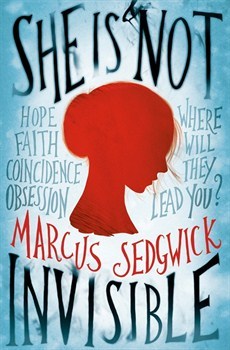
She is not invisible

She is not invisible
(image from its goodreads page)
Marcus Sedgwick

Laureth's father is the famous author Jack Peak. When on a routine trip, he goes missing. He won't answer his phone. Laureth's mother refuses to question it. Laureth might be the only one who will do anything about it. Her father's notebook appears in New York, the only evidence of him after the disappearance. Laureth books a flight to NYC, but there's another a problem. Laureth is blind. With her seven year old brother and her other senses, she'll have to brave the concrete jungle and find her father.

Okay, first thing, I am so glad the author didn't resort to third person because of "wow. much blind. such hard. no colors. :(". A lot of books are extremely visual and it's kind of nice to read one that isn't. There's plenty more senses than sight.

Laureth, as a character, was fab. Beyond fab. She fit strong female character criteria without equating strength with masculinity or a lack of emotion. She's a bit impulsive (lives in London, books a flight to NYC when it's implied her father's there). She's also clever and a little frustrated, but not cynical. Really refreshing as a heroine.

Benjamin was a little harder to judge as a character. I haven't been seven in a long time. Frankly, I have no idea how seven year olds usually act. He seemed a bit older than most seven year olds, but at least that's addressed. He didn't seem to develop much, or at least I didn't notice it.

There were a few things I wish were explained. For instance, the Benjamin Effect. Is it a coincidence or...? It's plot convenient sometimes and inconvenient at others. I feel like it's mentioned enough to get some vague maybe-it's-this.

In concept, the plot is rather dull. Person disappears. MC must go on a quest over a large distance to find them. Self discovery. Secondary characters appear. Person is found in an odd place/way. Yaaaaaaay. However, the execution is what makes a story sparkle. This was executed fantastically. The details made it feel like it was new and shiny. Very nice. *golf clap*

The occasional interception of normal text with passages from their father's notebook was interesting. I kind of expected just some italicized text for excerpts from other things. I liked how it was set-up, like the pages were scanned in. The notes and smiley/frowny faces made the whole thing feel alive.

The story was kind of a slow build. It wasn't blockbuster movie action-packed or anything. It was okay that way, but it didn't push me to finish it as much as I wanted to be pushed. There were a lot of scenes reflecting on things that happened before he disappeared, which gave it a more philosophical than thriller-y feel. Not sure how I felt about that.

On the romance- HA HA PSYCHE THERE IS NO ROMANCE THANK GOD. THANK THOTH THANK FREYJA THANK ANU. I'M FREE. I DIDN'T HAVE TO PUT UP WITH UNNECESSARY ROMANCE OR GAG ON SAPPY DIALOGUE AND KISSES EVERY TWO PARAGRAPHS. YEEEEEEEEEESSSS. HEY, LET'S THANK MAMLAMBO, TOO, JUST 'CUZ.

(Sorry for the outburst- but I think this is the only book I've reviewed without any hint of romance)
~Corinne

Friday, February 14, 2014

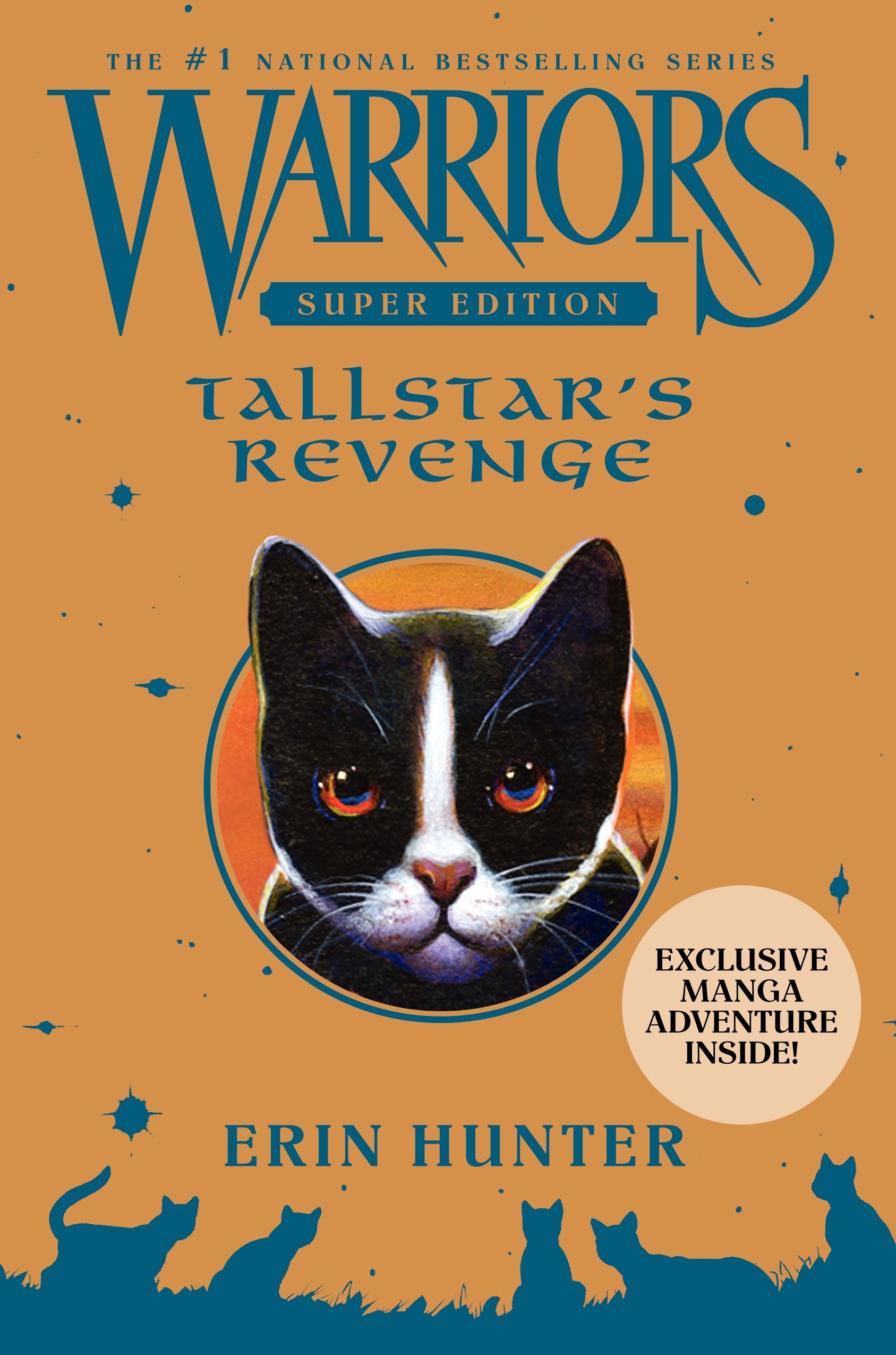
Tallstar's Revenge

Tallstar's Revenge
Erin Hunter
(Image from the Warriors wiki page)
WindClan is divided- tunnelers, who, as the name suggests, dig tunnels for escape routes, shortcuts, and ease of catching prey; and moor runners, who catch prey on the open moor. Tallkit is born into this broken society with his destiny practically sealed. His parents were both tunnelers, and most likely he will be, too. He hates this fate, but when his father is killed, he is determined to take up the duty. But he's denied, and the cat Tallpaw believes killed his father is let off the hook. Tunneling is stopped entirely.

When he gains his warrior name, he notices how little importance he seems to be. Talltail decides to leave the clan, planning to avenge his father. But can his plans ever come to fruition?
 
Since I enjoy lengthy anecdotes that you guys don't care about, I'm going to tell you why I picked up this book.

I started reading the Warriors book when I was really young- way too young to understand what was going on and also too young to understand why a book wouldn't have pictures. I kept reading the series for years. This past year, however, I called it quits. Doveykins and co. were rampant Sues (actually, maybe they weren't, I haven't reread them yet to check) and things were getting predictable.

So when I found this at the library, I figured it would be a decent reminder of why I might have read the series in the first place, and if it wasn't, hey, I could still read it for the laughs. 
I was pleasantly surprised by the reason I actually kept reading.

Talltail (Okay, Tallstar, but Talltail is what he's called for most of the book, so why change that?) was by no stretch a Stu, however angsty he may have been. For a large part of the book he's described as having a "burning rage" and that gets in the way of true development, but it gets better as the story progresses. He ends as a loveable, well-developed character.

I was amazed how well things in this book were tied in with other Warriors books. The main plot, maybe not so, but there were a lot of fun details to catch. There were also a myriad of technical errors (Appledawn changed gender within a page of the last use of pronouns), though that's become pretty much the norm in the books.

The plot was... unpredictable, almost? I don't know. In hindsight, I feel like I should have expected the find-yourself journey, because those seem pretty popular in Super Editions (Firestar's Quest, briefly in Crookedstar's Promise, I think). However, I was actually fairly surprised when Talltail decided to hunt down Sparrow. In fact, I didn't expect a number of things. It was a good change from my usual.
Got to say, this book wasn't emotional (for the reader, not the cats) for such a long time, it was almost disappointing. It almost got me thinking that despite the cast of snowflakes, it wasn't going to have power. Then at the end... oh, just you wait. 
 The execution and timing were great. Of course, the book was also extremely long, but why else would they call it a super edition?

Oh my deities, if I was still in the Warriors fandom, I'd so be squealing over how cute the friendship between Jake and Talltail was. However, as a reviewer, I must keep calm and collected. Though if I wasn't a reviewer, I feel you should know that I'd being cooing how beautiful they are together. And if I was in the fandom again, which I'm not, I would be squeeing about how, though it wasn't quite realistic that they became besties in a matter of days, they made perfect friends. You should also know that, say I was still a fan, I would be sad that they didn't meet up again later on. But I'm not a fan, even a little, so I'll say it in reviewing terms- it was okay.

Because there was no romance in this book, I'm allowed to mention it before the end. In most of the other books, there was unnecessary romance. (SPOILER: What's with Dovewing and Bumblestripe?) However, this book didn't have any. I took a moment to be surprised, then realized that, well, Tallstar didn't have any kits in the books, did he? So a thanks to Ms. Hunter for not throwing in lovely-dovely love as a trim.

Actually, I'm glad there weren't too many subplots. I hate it when books get a bunch of subplots that get in the way of the main plot. This was a perfect balance, not too simple, not to complicated. The Goldilocks zone of plots.

Ooh, two posts in two days. Lucky, lucky.
~Corinne

Saturday, January 18, 2014

If You Could Be Mine

If You Could Be Mine
(Image from its goodreads page)
Sara Farizan

This book was getting a lot of awe and wonder in Diversity in YA-esque groups, so I decided to give it a try. Oh, and this is the book I referenced in my last review of The Lost Remote (inside joke inside joke). So you know.


On my second failed attempt of writing a summary for this, here is the goodreads summary:

Seventeen-year-old Sahar has been in love with her best friend, Nasrin, since they were six. They’ve shared stolen kisses and romantic promises. But Iran is a dangerous place for two girls in love—Sahar and Nasrin could be beaten, imprisoned, even executed if their relationship came to light.

So they carry on in secret—until Nasrin’s parents announce that they’ve arranged for her marriage. Nasrin tries to persuade Sahar that they can go on as they have been, only now with new comforts provided by the decent, well-to-do doctor Nasrin will marry. But Sahar dreams of loving Nasrin exclusively—and openly.

Then Sahar discovers what seems like the perfect solution. In Iran, homosexuality may be a crime, but to be a man trapped in a woman’s body is seen as nature’s mistake, and sex reassignment is legal and accessible. As a man, Sahar could be the one to marry Nasrin. Sahar will never be able to love the one she wants, in the body she wants to be loved in, without risking her life. Is saving her love worth sacrificing her true self?


There. That's good enough. Long, but a fairly good, semi-spoilery summary. Okay. 
This book is possibly one of the most important books I have ever read. Frankly, I think that If You Could Be Mine should be taught in school instead of the same three books every year. There does happen to be one problem, though.
Schools don't like the idea of lesbians. Oh, sure, drugs, alcohol, suicide? Those are cool. We can keep those. But lesbians? God, are you trying to kill us? And lesbians facing real world problems instead of things that will never happen but sound moral-ful? This is clearly a problem. Hold me, I'm feeling faint. 
Ignoring that little rant, yes, Sahar and Nasirin face some pretty serious issues. Drugs and alcohol are referenced, death is faced and people fall into the amazing pit that is the gender spectrum. Religion is mentioned and religion is questioned. These are things that happen. Oh, and apparently other countries exist.

Since this book is a romance book (I know, what is this, the second one on all of Yas Read Yas?), I'm going to start instead of end with the romance. 

Sahar and Nasirin are definitely working on the "opposites attract" idea. I've always that of that as a rule only for magnets, but apparently people generate magnetic fields and it works for humans, too. Sahar is a bit of a tomboy, even though it doesn't quite show in the book. Nasirin, however, is pretty-in-pink feminine. Somehow, though, it works. I'm not sure if my opinion has something to do with the fact that this is a romance novel, so it has to work, or what, but I liked it. There was always a slight (and sometimes less slight) note of irritation with Nasirin from Sahar, but the chemistry was there.

On the actual plot (Whaaaaaaat, the plot wasn't the romance? I know. Crazy. I know non-romance novels that the romance was actually the plot), it was a bit odd. Not in a bad, oh-gods-of-Asgard-and-other-such-holy-places kind of way, but it was just a little strange. The arranged marriage part was interesting, but Sahar's attempt at changing her sex (not gender, though) seemed like the wrong way to go about stopping the marriage. It felt almost a bit forced.

The style was good, maybe not my favorite (Sahar almost sounded lost in her thoughts at random points), but certainly not a turn-off. The pacing was great, almost perfect. Actually, I'm not sure what perfect would be, since this is the best pacing I've seen so far, but I'm sure I'd know it when I saw it.

I really liked the random cultural tidbits about, say, how in Iran you don't put sugar in your tea, you crack sugars cubes between your teeth and drink through them. Though my tea-drinking habits will remain unchanged, it was interesting to learn about the cultures of other countries.

So, I mentioned that there were important (read: somewhat adult) topics in here. Yeah, while drugs and alcohol weren't a focus, and sex wasn't a huge thing, it was still kind of adult. Makes enough sense, since Sahar is seventeen and that's pretty late in the YA spectrum. So, I wouldn't recommend it to anyone who wants to shield their virgin eyes.

 Yay, spoilers! Mostly, I just want to talk about the ending, so I have to put it under the great arch of spoilerhood.

In the end, Nasirin and Sahar have to break up. Sahar goes off to college and Nasirin goes off to a really, really big house.

Sahar eventually visits Nasirin, and they decide the relationship wasn't right for them anyway and blah blah blah.

Now, here's the entire reason I spent the past, like, ten minutes working on that fancy, rainbow text. I have to ask why?! Why can't I find a story about lesbians that ends happily? That ends up with them happy and together? Is it a rule, that as a lesbian, your life must be tragic and you'll feel no love? Why must this happen to me all the time?

Now, if anyone knows about happy lesbians, feel free to comment.

~Corinne


Monday, December 30, 2013

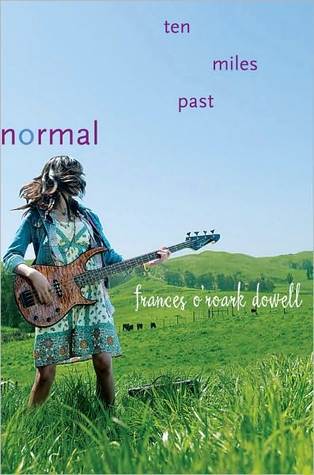
Ten Miles Past Normal

Ten Miles Past Normal
Frances O'Roark Dowell
(Image from its goodreads page)

The summary is going to be from the Amazon page. Sorry, I just couldn't figure this one out.

Janie Gorman is smart and creative and a little bit funky…but what she really wants to be is normal. Because living on an isolated farm with her modern-hippy parents is decidedly not normal, no matter how delicious the goat cheese. High school gives Janie the chance to prove to her suburban peers that she’s just like them, but before long she realizes normal is completely overrated, and pretty dull.
If she’s going to learn how to live large (and forget the haters), Janie will have to give up the quest and make room in her life for things from the fringe—like jam band, righteous chocolate, small acts of great bravery, and a boy named Monster.
Woo hoo. Thank you, Amazon, for providing me a way to be lazy. And while we're here, a shout out to my computer, for reminding me that I have no excuse not to write a review. A thank you to you both.
Okay, onto the actual part.
I loved Janie's character and voice. She was a really easy to relate to (someone tell me why "relatable" isn't a word, it would make my job SO much easier), regardless of whether or not you live on a Mini-Farm. She has a tendency to rail about her past self (who was very young and enthusiastic) and parents, but not as much complaining as a reviewer in a bad mood. As we should respect reviewers in bad moods, the amount of venting was also worthy of respect. It was just at the point of "Oh, yeah, I totally understand, literary character who cannot hear me speaking". I'm making this sound odd, but I'm sure you'd like it, reader who cannot hear me speaking.

But, as always, I must point something out that only vaguely has to do with the book. While I don't blame the author, Janie's character is the kind of character I see all the time in YA books with female protagonists. Tom-boyish, sarcastic, brown hair.

Ignore that last part.

Or don't.

Either way, I'm getting kind of tired of the generic "Sassy and Independent Barbie! (Boyfriend Included!)". It's like the be a "good character", the MC has to be masculine or, at best, gender-neutral. Anything that could even be considered feminine (the color pink, dresses/skirts, purses, make-up) is automatically shunned, deemed something for "cake-faced idiots that only know how flirt". Seriously? Can you not? Somewhere out there, someone is agreeing with me. I'm sure.

Ah, a lovely tangent we had there. Okay. Let me continue.

The supporting/secondary characters were well-written, too. Ms. Dowell either did a lot of developing outside of the story for them (the book wasn't particularly long, so most characters only had a day in the limelight), or had a great method of covering up that fact that she has no idea about these people at all.

Sarah, out of all the non-main characters, was my favorite. She had a kind of popular-girl dynamic, but without the automatic hatred you are supposed to gain upon hearing her name. In fact, I didn't feel a grand hatred of her at all. She was 100% unloathable. A wreath of flowers and a maple doughnut bar to you, author lady.
The plot itself was hard to follow, assuming there was an actual A to B plot at all. For the most part, it was a bunch of events strung together to make a story. It's... I'm noticing that a lot now. I mean, Wintergirls, Out of the Easy... What does this mean? Why are there so many "snippets of life" stories? Do they deserve a name yet? 

We'll assume that it's on of those, which I shall now call a SOL book. In which a case, this was a very good one. It even tricked me into thinking there was a plot, the sneaky little thing. However, if there was some kind SOLless plot I'm missing, it didn't do too great.
The emotions, I am so very glad, were realistic. It was easy to get lost in the going-ons of Janie's life. 
Sadly, I must now pick out the one thing that irritated me.  If I didn't, this would be "senseless praise", not a review.

The plot points, while I loved (almost) all of them, didn't get much attention of their own. They only really got short moments in the sun, and were kind of episodic. Personally, I think that either they all should have had a little more time spent on them, or some of them should have been dropped. There were just way too many things going on for any individual part to really get interesting. 

And the main one I must prey on was the romance. Oh, don't you gasp, you saw it coming from a thousand miles away. 

While the Love Interest (Monster) was interesting as a character and friend, that's what he did best as. An interesting character and an awesome friend. The romantic aspect was just taking time away from the other parts.

Trust me, the "other parts" I keep referring to vaguely, are pretty cool. Civil rights, hootenannies (Oh, so hootenanny is a word, but relatable isn't. Come on.), a vendetta against chocolate, crime-fighting goats? Well, not the last part, but you get my point.

Overall, pretty good book, would recommend it, thank you and good night.

~Corinne

Sunday, December 8, 2013

A Long Walk to Water

A Long Walk to Water
(Image from The Beachwood Reporter)
Linda Sue Park
I'm having trouble trying to summarize the book, so here's the summary from Goodreads:

The New York Times bestseller A Long Walk to Water begins as two stories, told in alternating sections, about two eleven-year-olds in Sudan, a girl in 2008 and a boy in 1985. The girl, Nya, is fetching water from a pond that is two hours’ walk from her home: she makes two trips to the pond every day. The boy, Salva, becomes one of the "lost boys" of Sudan, refugees who cover the African continent on foot as they search for their families and for a safe place to stay. Enduring every hardship from loneliness to attack by armed rebels to contact with killer lions and crocodiles, Salva is a survivor, and his story goes on to intersect with Nya’s in an astonishing and moving way.

Thank you, Goodreads, for solving almost all of my literary troubles. 

I just finished this book this morning, and since I have to compare all YA books with younger-age characters to Diamond Willow, I must say that this is a Diamond Willow. You do not have to be an eleven-year-old to enjoy this book. But you can be. Or maybe not. Who cares? Despite having two protagonists that are eleven for almost all of the book (SPOILER ALERT: Salva actually isn't eleven for all of it, though), it was pretty non-age specific.

The writing style wasn't my usual kind of read, but it still did it's (amazing) job of pulling me into the life of the characters.

The pacing was flawless, and so were the characters. I just wish that we would have heard a little bit more from Nya. I feel like the little snippets about her at the beginning of the chapter could have been just a little longer. 

Just saying, bring a box of tissues for reading. This book can and will make you cry. Sometimes, it's hard to realize that not everyone has running water and a computer to type reviews on while sipping tea. And the realization is hard. But knowing is better than any kind blissful ignorance. You can't try to help if you don't know.

And, ah, there were so many quotable lines in this book. In 112 pages, it had more memorable lines and moments than in most 400 page novels. Alas, I could not highlight anything because it's a library book. 

Okay, I'm sorry that this review was so freakishly short. I mean, five paragraphs of actual review. Very, very short paragraphs, too. Frankly, since this book is based on the childhood of someone (Salva Dut), I feel kind of odd reviewing it. Like, I'm reviewing parts of someone's life. And it was impossible to tell which parts were fact and which were fiction except for Nya's parts. Or even if Salva's narrative was fiction at all.


Interesting fact: This is why I didn't review The Queen of Water by Laura Resau and Maria Virginia Farinango (my computer doesn't allow me-to my knowledge- to make the accent mark in Maria, so sorry for that). That was an awesome book, too. Why did I review this one, then? The world may never know.

Also, this is Dut's organization that builds wells in Sudan- http://www.waterforsouthsudan.org/

So you know. :3

~Corinne

Thursday, November 7, 2013

Broken China (a non-review)

Broken China
(Image from its goodreads page)
Lori Aurelia Williams


This is a book I am highly disappointed did not get a gigantic gold medal to show off on the cover, because it was way more deserving of it than most of the books that do.
This is a non-review because the book is roughly eight years old, and while I know I've reviewed older, I've got policies on that kind of thing now. This is mostly for the purpose of getting it out there.

Onto the description.

China Cup Cameron had her baby, Amina, when she was twelve. Two years later, tragedy falls in the form of a heart condition no one knew about, and Amina dies. The funeral is much more than the three thousand the insurance company will pay for. China's uncle can't work, but China can. Even if it's at the local strip club.

This book is two things that are hard to find together in YA- important and interesting. You'd be amazed how hard it is to find a book like this. (Almost) All the stories about big, hard topics are boring. Most of the ones that can keep my attention are more of light reading. It's horrible that way. But Ms. Williams pretty much punched that standard in the face. Good on you, Ms. Williams.

The characters are fun to read and realistic. The pacing was fast, but not pull-you-along-razzle-dazzle-impossible-to-read fast. I'm planning to force myself to forget all the details and plot points to enjoy the full experience over again later. Of course, forgetting won't be fun, but let me do what I do.

Once again, not a review. Many apologies. But, seriously, awesome book.

Expect an actual review when fairly soon. Yeah. Sorry again.
~Corinne

Monday, September 2, 2013

The Unbearable Book Club for Unsinkable Girls

The Unbearable Book Club for Unsinkable Girls
(From julieschmaucer.com)
Julie Schmaucer


Adrienne Haus liked reading, she really did, just not with other people. And most certainly not when she's signed up for a mother-daughter book club. She has three other literary prisoners to keep her company- Jill, who was pressured into it because she 'needed to socialize', CeeCee, who bashed up her parents car and had her trip to Paris canceled, and Wallis who, for reasons unknown, actually wanted to come.
Of course, it couldn't be a regular book club where you eat fancy crackers and discuss classics. Book clubs can kill.
... Uhhh... Well, I've got to say, I can't explain it that well. I assure you it was a good book. I shall now review it.
I'm going to start in the exact way I do not enjoy starting- I LOVED this book. Correction, I loved the book after I was done. Not in a 'thank Moosamoset it's over' way, but because it took a while to really get into the book. And then it basically strapped you in, and in a gruff voice said, "You know you ain't comin' out again, right?" You, fortunately, have no control as to whether or not the car starts, since it was a rhetorical question. Then you laugh and scream and cry like a maniac.
And that's when the ride starts.
First turn, laugh. This book was awesome. It didn't try to force humor where it wasn't welcome and it didn't go bland. Though there were a couple moments which I think might have possibly probably were supposed to be jokes that didn't quite make sense.
Second turn, and you scream. I'm sorry, but somewhere in this review I have to mention the books weak points. None of them are actually scream-worthy, luckily. Just a couple of pet peeves  of mine that I must now whine on.
Okay, so I already mentioned that it was slow to get into. Yeah. Okay. Won't go farther on that. And you know how great I am at complaining about MCs, but there was only one little thing that irritated me about her, and I'm sure we've all seen this problem before: If she's such a bookworm, why does she only read classics? I get it, they're easily recognizable and their copyrights have probably expired, but still. Can one YA MC read, well, YAs? What kind can't you type up a bad summary of a random idea in the back of your mind and call it a book? You don't even need a title.
And then, per every book that wants to send a message, there is the drinking scene. I shall summarize all of such scenes, this book's included. Girl does not EVER NEVER drink. Girl is offered alcohol. Girl takes alcohol. Girl complains about alcohol, either in dialogue or in thought. Girl commences to drink a whole lot. Drunk scene. Faints. Hangover/consequence scene.
Thank you, thank you. I understand this time the scene was actually kind of important to Adrienne's development (shy, unassuming girl becomes rebellious that's just as unique as everyone else), but there could have been a better substitute. Come on, something. If anyone has any idea on a substitute for this scene, please inform me. It's getting boring.
Third turn, now we go up a hill, cry. You bounce along in your seat, both dreading and getting anxious for the inevitable drop you will face, along with the twists and loops of the following track. This is edging towards the climax, so the emotions are tight.
Very tight.
Very, very tight.
Tight as emo jeans.
I appreciate the change in tone from 'summer read' to 'book I will remember and author I will look up to'. This is when I actually grow attached to the characters, when I finally get a favorite. The emotions are right and are shown instead of told. *applause*
You've reached the peak of the hill, and the moment takes centuries of looking down the hill to drop. Then, in the blink of an eye, the climax is over and you're rushing towards the epilogue.
The ending.
The ending the ending the ending.
I LOVED the ending. Eeeeeeee! Plot twist! Twist twist! DON'T CARE.
Not like I get anything such as, say, a few, a lot of my questions answered, but that's part of the ride. You have to answer some of your questions yourself. It's practically inviting fanfiction and giving it a mint as it comes through the door.
Highly recommend it.

Tuesday, August 6, 2013

It's Raining Cupcakes

It's Raining Cupcakes
Lisa Schroeder
(Image from her website)


Small town girl Isabel is dying to get out of Willow, Oregon. When her mom opens a cupcake shop called It's Raining Cupcakes, she is inspired to enter a baking contest. The grand prize? A trip to New York for finals and a thousand dollars if you win. The only problem is that Isabel's best friend, Sophie, has entered the contest too, and both of them are determined to win.

Reeeeeeview time!

 So, I'll start out with stating the targeted age. It's for about nine to thirteen year olds. And that isn't in Diamond Willow's way that you can think of the main character as another age and have it seem like it's for you, too. It is very apparent who it is for. 

That doesn't mean I didn't enjoy it, though. It just wasn't 'classic' material. It was still funny and interesting, just not 'deep' or 'educational'.

We start out learning that Isabel's mom wants to open a cupcake shop in the old Bleach-o-Rama, having found a recent love for the art of cupcakes. This was, of course, not rushed at all. And, less sarcastically, not really well planned. Does she always rush headlong into things that are so big? We may never know.

Blablabla, we meet Sophie, a kind of two-dimensional perfect-girl character. She does whatever want and gets whatever she wants. And she introduces Isabel to the baking contest, which Isabel both does and doesn't want to join, since Sophie is joining and Sophie gets everything. Which is now a legitimate reason to give up, which seems kind of odd, since a major subplot is keeping Isabel's mom from giving up when she hears a chain bakery is coming to town.

Isabel's mom encourages Isabel to submit a cupcake recipe, but Isabel thinks that would be too unoriginal. She tries anyways, but doesn't like any of the end results. However, when a new neighbor comes back from England with jam tarts, she's inspired to submit a jam tart recipe without her mother knowing.

 Realizing it may hurt her mother's feelings if she didn't submit a cupcake recipe, though, she throws away the tarts. 

Stuff happens, Sophie steals Isabel's chance for fame in an interview with the family, Isabel laments for a bit, we learn something about the magic of friendship, spoiler, book ends.
Now let's be a bit more straight forward about how I felt.

This book was, no sugar-coating it, okay. Most of the characters were relatively two-dimensional and it wasn't a particularly emotion-inducing book. This may just be because it's for a younger demographic, but it was still somewhat disappointing.

It did, however, keep my interest throughout the story. While it didn't force me to turn the page, I did want to know what happened next and what would happen to our heroine next. 

I'll have to applaud the fact, also, that it wasn't in-your-face about the fact is was a tween book. Instead of some books *dramatic glare into the mist of horrible writing*, it did not act like the very life of all people under twenty was to mall crawl and text. The voice was believable and relatable, and I didn't want to punch the author in the face. Trust me, this is a big step up from how I usually feel about tween books.

The style was kind of beige (but at least it wasn't purple, right?), but it was still a good read for a rainy day. Eh, three stars, maybe add a half star for the ending (and the recipes, but shhhhhh). 

Also, in other related news, the author has another book called Sprinkles and Secrets, which is a sequel.

Friday, July 19, 2013

Wintergirls


WINTERGIRLS
LAURIE HALSE ANDERSON
(Picture from http://lovelyreader.blogspot.com/2011/05/wintergirls-review.html)

Trigger warning: Eating disorders

Whoa. An actual review. Crazy.

Anyhow, so Wintergirls is about a girl (Lia), who suffers from anorexia. Her friend, Cassie, recently died, alone in a hotel room, after she called Lia 33 times. Cassie was bulimic and told Lia she was brave, strong, when Lia rapidly lost weight.

So, strange thing about this book. There was no 'getting from point A to point B'. Honestly, the plot was basically just an important snippet of life for Lia. I thought that was interesting.

Onto the actual book.

I want to say I loved this book. I mean, I really wanted to love it. I bet I could have loved it. But reading it was like swimming through corn syrup instead of water.

It was like reading a poem, minus the breaks that make it sound like a real poem. It was thick with metaphors and similes, and while they sometimes improved the mental picture, a lot of the time it made the writing muddled and confusing. It was kind of like purple prose.

The character, however, was relatable (well, as long as you're a teenaged girl, so sorry guys) and well written. I'll begrudgingly accept that some of the things she said (the book is written in the first person), which made it sound more poetic and purple, actually kind of made sense. Made a lot of sense. Whatever.

A couple of things are mentioned at one point and then forgotten for the rest of the book. Lia's little sister, Emma, has two cats, which disappear after one mention. The Cupcake Scene (as it shall be addressed) happens, and then is promptly forgotten, even though you'd think Lia would remember it and that it would be important in her records at New Seasons (a mental recovery place) later. Maybe, 'hey, look, she actually wants to/can eat, she just doesn't'. Something like that is a tad important.

The dialogue was well thought out and believable. People, unlike some stories I've read, actually spoke like people, not Shakespearean characters. So, despite the way that it was written, it's not like normal people spoke like poets.

On the other hand, a lot of parts of this book were confusing. I'm not sure if that's the metaphors and similes talking, but some parts of the book make me wonder if Lia was a psycho, because they just don't make sense. It's like the author would occasionally forget that this was supposedly a contemporary book. Trust me, if you read it, you'll know what I mean.

About halfway through the book, it actually starts sounding like a true narrative, and then it slowly falls back into the poetic, purple style. Just thought that was interesting.

Despite my complaining, this was a good book. The dialogue and emotions were both very believable, and the plot (or whatever it is) was good. So... Yeah. Also, if you like symbolism, you'll probably love this. I don't love symbolism. It's my personal opinion that probably made this book seem worse to me.

Monday, June 17, 2013

Diamond Willow


Diamond Willow
 
  (image from http://us.macmillan.com/diamondwillow/HelenFrost)

Helen Frost

 Diamond Willow is a story about a twelve-year-old girl in the Alaskan wilderness. Willow, the main character, is a junior dog musher. One day, she takes a trip to her grandparent's house, but one wrong move changes everything...
I want to clear this first: this book is for much younger people than our average. Oh well, boo hoo.
So, we start this book learning a bit about Willow, our main character. As the description says, she's a junior dog musher ( NOT an easy job, by the way). Not an Iditarod junkie or anything, she just likes to work with the dogs her father owns. The description is pretty vanilla, it's basically what I'd expect for the age. Brown hair, brown eyes, plain in all ways. I think there could have been at least something to make her stand out. Not necessarily, though.
We go on to learn that Willow wants to go on a trip to her grandparents, who are native Alaskan and rather awesome. Just putting that out there. After a bit of convincing, her parents let her go.
Willow picks her dogs, a few of her favorites. Some part of me wondered why she needed four (at least, I think it was four) dogs. It's a long journey, but how heavy can this girl possibly be? A hundred pounds? How much supplies are in that sled? Twenty pounds at most. Never mind, I just think three might be a bit better.
Anyhow, the grandparents just act cool, do stuff, and eventually sen Willow and her team on their way with some smoked salmon. Sounds about right.
From this point on are spoilers. Be warned.
It's snowing pretty hard, but Willow just says "Eff you, weather." ... Well, not in those words, but whatever. When coming around a blind curve, they hit a fallen tree, and Willow's best dog, Roxy, gets hurt. Badly. Her eyes are stabbed by some kind of stick or something (I don't believe the book ever says, which I wish it did). Her eyes are bleeding horribly, and we get a nice, somewhat disgusting description. I liked how well it was described, though. It wasn't too graphic or too simple. Good on ya', Ms. Frost.
Turns out, out of those twenty pounds of supplies I assumed she had, there was no first aid kit. Instead of saying "Psssh, I'm the main character, I'll stay calm.", she shows emotion! Fabulous! She scared, worried, hoping her temporary solution of using her shirt (instead of ripping off a piece of it, which is much harder than writers apparently think) will work for the remaining few miles. With three dogs, a much more logical number.
Her parents react two ways. Her mother is more worried about the giant bruise on Willow's leg. Her father seems more worried about Roxy. Willow is scared he'll hate her for it. I'm sure we all know that feeling, when we made a horrible mistake and become sick with anxiety and guilt. There could have been a bit more showing instead of telling in how she felt, but this is a younger audience it's being targeted at (8+).
Well, Willow heals pretty fast (though she is still a bit sore) and goes back to school, where we meet her best and only friend or the first time. Kaylie (I'm taking a wild stab at the spelling) is the perfect girl, complete with perfect grades and having never missed a day of school. I'm glad she was the friend, not the MC. As we know from my recent complaint average-in-every-way-but-school characters bother me (Willow has average grades to go with her averageness).
Anyhow, life goes on. Then, after a POV switch I'll explain with he formatting, Willow finds a note saying that Roxy is to be euthanized now that he is in pain and is blind. Forever. Prepare for the mini-rant.
So, why did Willow go so insane about the euthanizing? I understand some tears and such, but she wasn't using any kind of reasoning I'd ever heard from a twelve-year-old. I expected "My dog! I love her so much, why oh why?!", which is pretty realistic for us young folks. Instead, we get "How do THEY know it's merciful? They can't ask her! What if she'll die in pain?!" Not what I hoped for. First off, it's mouth piecing, and second, it's a bit too much from a tween.
Okay. Sorry.
Willow devises a scheme to save Roxy. She will bring her to her grandparents house, where hopefully they can take her in with their other dogs (who we never see and are given no description). Kaylie is dragged into this because someone needs to hold Roxy to the sled so she doesn't jump or fall off. Kaylie has an (understandable) panic attack, but agrees reluctantly.
In near white-out conditions, they set off with three dogs, two humans, and one dog who cannot do anything. Now this number is ILlogical, because that's an extra two-fifty odd pounds added on. I will calculate until this works.
They get lost, but find a clearing to sleep in. With the smoked salmon and other foods Willow grabbed at home, they eat and sleep. In the morning, they set off again.
Eventually they are found by Kaylie's not-secret admirer, but only Kaylie goes home. Now that the weight amount is somewhat more logical, Willow continues on to her grandparent's house. Somewhere around that time Willow's frantic parents and less frantic little sister find her. They end up discussing all of this at the grandparents'  house. Willow is neither speaker sternly to or given a punishment, though this scenario justifies both.
Even bigger spoiler alert.
Willow is told about how she had a twin. Named Diamond (which explains the double name). And the place that Willow and Kaylie slept for the night? It was where they scattered Diamond's ashes. Does this freak out Willow? Nope. I'm just saying, but I would have a heart attack if I heard that.
Roxy is saved, end of story that I will tell you (I won't spoil everything).
Okay, the formatting. I feel the need the explain it. Most of it is in diamond poems, but POV will switch occasionally, and it will be in plain text. The narrator is announced. I'd like to mention that an Athabaskan  belief I that when someone dies, their spirit is put into an animal. It might not make sense now, but you'll be glad for it.
I liked the book, it managed to make me cry (in a good way), I'd recommend it.
Had a couple issues with this, had to repost. Sorry.


Monday, February 18, 2013

The Earth, My Butt, and Other Big Round Things

THE EARTH, MY BUTT, AND OTHER BIG ROUND THINGS

BY CAROLYN MACKLER


Fifteen-year-old Virginia Shreves has a larger-than-average body and a plus-size inferiority complex. She lives on the Web, snarfs junk food, and follows the "Fat Girl Code of Conduct." Her stuttering best friend has just moved to Walla Walla (of all places). Her new companion, Froggy Welsh the Fourth (real name), has just succeeded in getting his hand up her shirt, and she lives in fear that he’ll look underneath. Then there are the other Shreves: Mom, the successful psychologist and exercise fiend; Dad, a top executive who ogles thin women on TV; and older siblings Anaïs and rugby god Byron, both of them slim and brilliant. Delete Virginia, and the Shreves would be a picture-perfect family. Or so she’s convinced. And then a shocking phone call changes everything.
Yeah, sounds pretty cliche, right? Boo-hoo, I'm not perfect, I'll die in a hole sort of thing? Well, now that you've crossed the river and reason and jumped to conclusions, I'll say that this was one of the best books I've ever read.
When I first saw it, I was pretty sure I'd eventually choke on the romance and spend the next five days puking up little hearts. Even worse? There was a huge possibility for that to happen. The main character, Virginia, did have a sort-of boyfriend. Well, he liked her and she was pretty sure he didn't want to be seen in public with her, which is pretty realistic for real life teen romances. Her touchiness on the subject and the fearful what-does-he-want thoughts I loved, I think they really added character and realism.
The family structure, sadly, was very realistic too. Virginia feels like they never notice anything about her but fat, rebellion, or fat. It doesn't really help that her mother didn't notice Virginia's A+ on a huge language arts assignment put on the fridge, but she did notice when a picture of a model (dubbed "the Food Police") was put on. Or that her father hasn't been much for interacting before, but once she got onto a diet, he noticed Virgina a lot more.
The strain to be perfect was very prevalent in this book, and I almost felt a little bad when Virginia loosened up a bit and started rebelling against her mother's rules. The one thing that really bothered me about this was that the first time she really rebelled was something big, with no hints leading up to it. You don't just suddenly start skipping school, I mean, there had to be some better reasons for it. And then she buys a non-refundable plane ticket without her parents knowing. I mean, I'd have liked some kind of hint that she didn't like being the good girl before that.
Otherwise the emotions were handled well and focused with equal ability. It really changed how I felt depending on what the character was feeling, it was done just that perfectly.
The characters were amazing in this book. No Sues, no sparkles, no need for a refund. But seriously, each of them had a unique, interesting, and realistic.
I'd recommend this book without hesitation.

~ Corinne