Showing posts with label alternate universe. Show all posts

Friday, January 30, 2015

A Thousand Pieces of You
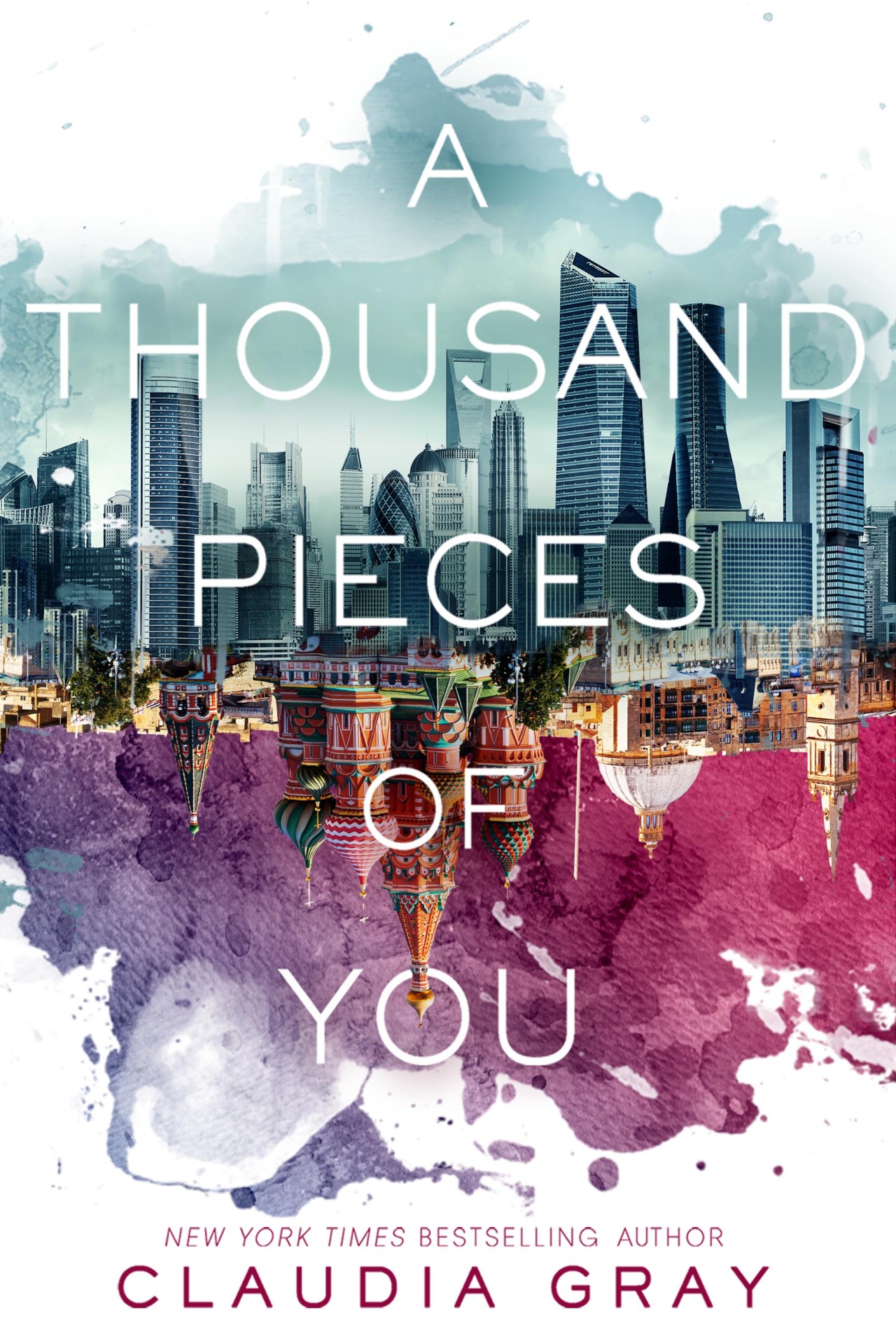
A Thousand Pieces of You
(image from epicreads.com)
Claudia Gray
(Trigger warnings for: Mentioned drug and alcohol use, sex (non-graphic), murder, a lot of water)

Just after his invention of a reality-hopping device, Marguerite's father is murdered. With the help of one of her parent's assistants, Theo, she chases after the man she's convinced killed her father.

The summaries are getting shorter every time I write them, I swear. Also, fun fact! I picked up this book because the title reminded me of that of a fanfiction I like. The more you know.

Sad start to the review, but here goes. I honestly wasn't too interested at first. There were other books to read, and it just wasn't that gripping in the beginning. But... oh my Thoth, once it got good? It got good. The plot heated up outside of some weird revenge-thriller. Not all of it was perfect, but it was mostly pretty great.

I genuinely enjoyed the characters. Even the Love Interest wasn't defined solely by Love Interest-ability (this brings me a weird kind of joy). I don't even know how to describe it. The parents were a little Leave It to Beaver, ruffle your hair type parents, but it didn't really take away from the novel.

Also- ploooottt twiiiiistttsss? I don't think I've read such a twisty novel in a long time. And each twist was pulled off well, with foreshadowing, but not a ridiculous amount of foreshadowing. But (you people are getting so tired of 'but's in my review, huh?) the thing is, it was maybe one twist too many. Getting excited got sort of... boring. And in between twists, it didn't feel as interesting. Which is kind of sad, because they were still good twists.

The universes were great. I mean, I'm not too great (see, there it is again), but 'great' is my version of being one step behind throwing it at people and screaming 'READ IT READ IT READ IT'. The Russia universe seemed kind of like a 'royalty AU' fanfiction at first (it technically was), but once the train scene hit? Ho ho ho, dear reader, it was awesome. [Spoilers of war] But did we need the sex. [Back, spoilers, back]

Okay, I have a question. Is there a sequel? Will there be a sequel? Because the end sort of felt undone. It ended the plot of the story, but there were so many possibilities and outcomes that just need to be addressed in a second book. Or in fanfiction. Heck, the end of the book essentially gave the plot of another! Argh. Now I need to check.

Conclusion: Amazon calls it 'Book One'. So I think we're good.

And, as last paragraphs always are, the romance aspect of things. This entire paragraph is a spoiler, so if you don't want to see it, avert ye virgin eyes. I actually sort of liked the romance. It was a good romance. They both seemed to genuinely like each other, and we weren't slammed with descriptions of Paul every single time she looked at him. It wasn't super sudden either. They had known each other for a while and were friends. The angst over 'Russia Paul is dead' made sense, even if angst isn't my favorite trope in novels.

 So. Good book. Might be a little hard to get into, but worth it once you start.

(Posting on time? Ha. Ha ha ha. Ha. Luckily, I finished a couple books while procrastinating on writing this, so you might get the next one before winter ends.)
 ~Corinne

Saturday, August 30, 2014

The Strange Maid

The Strange Maid
(image from its randomhouse.com page)
Tessa Gratton

(Trigger Warnings for the book: Death, alcohol)

(Gif warning for the review)
Signy Valborn climbed the New World Tree when she was seven, looking for Asgard at its top branches. It wasn't there, but the Allfather was. He promised her that if she could solve a riddle, she could join the ranks of the Valkyries. For ten years, Signy has trained to become a Valkyrie, trying to solve her riddle all the while. After running from home to live in the streets of Chicagland, she's not eager to trust Ned Unferth, who claims to know the answer. A Greater Mountain Troll, he claims, will hold the solution. Signy knows she's running out of time. She'll have to trust him.

You know, I was so proud of my summary for The Last Mango (If you're confused, read the review for the predecessor book- then you'll know why I refuse to call it by its real title.). Not sure what went wrong this time.

(image from Pintrest)

Yes, kid, this is a kissing book. There is lots of kissing. You're going to have to get used it. But, hey, there's a plot, too, so get over yourself. Here are the characters who may or may not have kissability:

Signy Valborn- KISSING RATE: HIGH- Finally, a strong female character that isn't a) basically a male character that the author decided should be female, or b) a sex object hiding under the strong female character guise. Signy was a genuinely interesting and cool character to read about. She had almost all the traits you want in a female character, without the chaser of "stage seven Other Girls syndrome" and "magically fails to do anything when Love Interest comes along". A+ main character.

Ned Unferth- KISSING RATE: Lower than Signy, but higher than, say, Sharkman- This is ~Love Interest~. You can tell just by those squiggles that I have a bone to pick. However, I actually have no reason to pick that bone other than Ned's brooding and angst. And the brooding and angst was reasonable too. So, while his character wasn't my favorite, there's no reason to actively hate him. Sad, I know.

Soren Bearstar- KISSING RATE: haha your girlfriend got turned into a goddess everybody point and laugh- I actually liked him better in this book than in the last. Is that weird? He was the MC of the last book. Anyway, he felt more sympathetic and real this time around.

Sharkman- KISSING RATE: Lower than Ned, but higher than Soren- Not important, I know, but for a secondary Love Interest, he probably should have shown up more. Or at least had a personality. Or something.

Baldur- KISSING RATE: Probably still higher than Soren- Okay, I'm only putting him down because I thought he was cool. He only showed up once.

The writing style wasn't too compelling. It wasn't really boring, but it didn't demand my attention. I felt like the narrator could have been a little less detached. However, it was good to see some real emotions from this main character, even if they felt a little bit at a distance. Perhaps third person would fit the style a bit better.

Ooh, ooh the twist near the end! I love end twists! That was pretty darn great. And it made sense, but wasn't obviously going to happen from the beginning. If there were more plot twists like that, reviews would be a happier place.

The balance of action and character development was pretty sweet. Not summer blockbustery, but also not romantic tragedy. Realistic, without one subplot beating out another. Or, well, as realistic as a fantasy book can get. You know. Anyway, veddy veddy good, Ms. Gratton, veddy veddy good.

On the romance: Let's face it, even though I have no practical reason to dislike Ned, I disliked Ned. The air of father figure/mentor and also Love Interest was unnerving. If he stuck as mentor and Sharkman became the Love Interest, I think I'd take it better.

I'm torn whether I liked this book or the last book better. The last one I liked the characters and plot better, but this one didn't have the same problems that bothered me last time.

(Let's face it, if my immune system was better, you guys wouldn't get anything.)
~Corinne

Wednesday, July 30, 2014

In the After

In the After
(image from naomibates.blogspot.com)
Demitria Lunetta

Three years ago, They came. Amy was watching TV while it happened, witnessing what looked like a spacecraft in the city center. Since then, They have attacked every human they find, and they attack to kill. Amy has managed to survive and rescue a toddler she named Baby. They both have to work to survive, staying in Amy's (luckily reinforced) house.

When they are captured and taken to a colony called New Hope, they believe they've reached safety.

But did they?

Sorry if this review is short or just weird, it was a while ago that I read it. By a while I mean like a week. Memory capabilities, amirite?

I'm surprised that I actually liked Baby. Usually small children in YA are used as an 'aww he's so cwute don't you wub dem' factor. Which I hate. They don't have a personality beyond being cute. However, Baby was interesting and individual. She was actually likeable, not just a prop. It's sad that's so exciting, but still.

Amy was very close to your typical YA heroine, but had an original streak enough to keep her interesting. She actually can express concern and do things! Wow! Why is this so hard to grasp in other books? Ms. Lunetta, thank you for allowing emotions and actions to coexist. That is important.

[Please properly dispose of all spoilered goods] Sadly, this is another book demonizing science. I hate this for two reasons- for the love of Athena, science is frickn' beneficial to society, and also the target for a lot of YA is girls. You wanna know what career field girls are being pushed out of? Science. Girls need to learn that science is cool and they can be part of it without being terrible plague-monsters. Girls could cure cancer and get us to Mars if we stopped acting like science was a boys-only club. THIS IS SO IMPORTANT TO ME I AM SCREAMING STOP DEMONIZING SCIENCE. [Spoilanger over]

 The pacing was good, though not much seemed immediately important until later in the book. The subtle details from the beginning being huge later was cool, but if the writing style hadn't immediately caught me I might have gotten bored with the lack of plot progression. As I just said, though- the writing style was (waitforitwaitforit) fan. (Okay, if you read the book you'd get it.)

The Florae (just referred to as They in the beginning) were an awesome example of a monster species. The had strengths and weaknesses, and the weaknesses weren't the usual Achilles heel sort of this. They couldn't hunt in the dark, which doesn't seem like it should be big and original, but it is. There's more, I just feel like discussing more would count as spoilers. Anyhow, great monsters.

The format later on with the flashes between the future and the present were cool. It could get a bit confusing with information revealed in the future and not mentioned in the past, but it wasn't what-is-going-on-why-am-I-in-this-dark-room-with-no-windows confusing.

[Spoilered milk] The ending was kind of... eh. I liked the idea of the Florae being alien or plant based. But the zombie thing? Meh. It just felt like a cop-out. No need for more zombie fiction, I swear. [Shh, it's over now... It's alright]

On the romance. It was kind of strange to me, like they weren't really being romantic but they also weren't in the sort-of-friends category? I kind of wish they were either slightly more romantic so it would feel like boyfriend/girlfriend, or slightly less so it was more close friends. 

(Yes, I know it's short)
~Corinne

Monday, June 30, 2014

Shadows

Shadows
(image from cuts-of-paper.blogspot.com)
Robin McKinley

Maggie lives in a world that has separated itself from magic. Newworld's workings are based on science, and magic was gene-chopped from every family generations ago. But Val, her new stepfather, carries with him a presence that can only be the magic of the Oldworld, where he came from. Shadows seem to center around him, and he refuses technology in his shed/office. But soon Maggie will have to face a reality that forces her to rely on Val's shadows and, possibly, her own heritage.

THERE. Summary DONE. If anyone can figure out what genre this book is, I'd be glad. Dystopian, fantasy, paranormal? I think I'll just file it under "other".

I'm going to have a Jill appreciation moment. Practically first YA BFF that wasn't cast aside for romance. Platonic relationships for the win!

On a less savory note, the plot didn't really come to a boil until nearly the end of the book. There was a lot of set-up, and that set up was cool, but even at the end the conflict seemed a bit hazy. I have a feeling this book is the first in a series and I'm missing the others. 

The characters were so great. I'm giving them individual paragraphs because I don't want a huge text block.

Maggie- Somewhat irritating tendency to use valley girl-esque slang, but that kind of added to character, so it was all okay. Cool with animals and non-animal things that may or may not be sentient, always a plus. Interesting character for a POV. B+ Character, would be A if she wasn't so obsessed with butts.

Jill- The best character by far. She's possibly the only character that, despite her foresight, was any bit NORMAL.If you can't tell from the top note, yeah, I really love how she was in a platonic relationship that wasn't thrown aside for the romance. Even if she acted as wingman occasionally.

Takahiro- Quiet, but not brooding. Interesting to learn about, but not because of some super deep-dark mysterious past. [DEAR GOD THE SPOILERS HAVE RETURNED, HIDE YOUR CHILDREN] He wasn't totally love interest material. However, no love interest is perfect- they can just sucker punch cliches like Taks here. [Hush my darling, don't fear my darling, the spoilers sleep tonight...] It's also really nice not to have another white love interest. Speaking as a white person, I'm okay without another black-hair-green-eyes-tan-skin-but-still-white guy.

Casimir- Well, I thought [THE Spoilers from Italy are coming today ] That he was going to be the love interest, and was kind of thrown off by how he wasn't. Really, he was kind of pushed away. Sad. [*creeps away from the spoilers with a sense of loss and confusion*] Anyhow, I think he would have been cool if he'd been given a little more time. Interested in science, knows his mythos... THERE WAS SO MUCH THERE. WHY.

Val- Seems like the bad guy, but I assure you he isn't. Fun to read about, decent for sympathizing. I'm glad he didn't end up as the villain, because that would be way too easy.

The writing style was a bit weird. There was a lot of future slang and a clear attempt at being open to the "younger" audience (read: valley girl talk). There was also virtually no commas. That's not a voice complaint, that's a comma-hoarder feeling bizarre that no one agrees with them. It's not a perfect voice, but you can get into it easily enough.

The fantasy elements were awesome. I loved the shadows, even though they weren't described in detail (lots of legs, snake-like, silver eyes- anything else?). I wish the cobeys were explained a bit more, but, eh, we can't have everything.

I'll admit, it didn't exactly keep you on the edge of your seat. The exciting stuff only really started in the last two thirds of the book. That was disappointing, but at least it happened eventually.

Now, to the romance. If you don't like spoilers just go to the point where I sign off. It'll be easier that way. Takahiro as the love interest gave me mixed feelings. While it's nice to have a love interest that isn't the mysterious bad boy, he didn't seem like a love interest. He doesn't seem to talk to Maggie until they fall in love. The two have one common interest- origami. That's ONE thing. ONE. I require two common goals or interests to be pleased.

~Corinne


Sunday, January 12, 2014

The Lost Sun

The Lost Sun
(Image from usatoday)
Tessa Gratton

In a world where the Norse Gods are real, it usually pays to be a beserker. Unless, of course, you're Soren Bearskin, son of a previously acclaimed beserker that went insane and killed thirteen people and had to be shot down by a SWAT team. 

His life seems to be going up when he meets Astrid Glyn, a seethkoma who's famous prophetess mother went missing. But his celebrations end when Baldur, the much-loved god of light, fails to rise. Now Soren and Astrid must find the missing god, and confront their own problems along the way.

I vaguely enjoy the summary I just wrote. Isn't it beautiful? However, beauty can't last, so onto the (extremely unorganized) review.

You know that one person you really want to like, but have these little habits that just bother you so much? This book was that person for me.

First of all, I love the plot. I could roll around in the plot all day while giggling like a maniac. A road trip to save a god? Awesome. Beserkers and prophetesses? Heaven Valhalla. Journey of self discovery? I love you.

And the plot was executed so beautifully. It was well-timed and well-written. The pacing was more beautiful than that summary I'm still fairly proud of. In fact, if that was the only way I judged this book, I would probably be shoving it in your face screaming, "READ IT READ IT READ IT!"

And the world? So fabulous. Oh so fabulous. Perhaps not the best built one (Does everything have to revolve around the gods? I mean, a lot of stuff being dedicated to them make sense, but absolutely everything?), but still amazing and great and fabulous and [adjective with a positive connotation]. This may have something to do with the fact that I'm obsessed with most mythologies and folktales, but ignore that. My bias can be ignored.

Wait, no it can't. Because I've read Prose Edda, and I know all you slip-ups and stare into your soul.

A lot of the stories referenced/mentioned in this book were changed for no apparent reason. A couple are reasonable (Freyja magically becoming the goddess of magic, when that's more of Odin's thing, makes sense because too many people with Odin as their patron would be weird). But for the most part, it wouldn't be significant if they were told correctly. For instance, Baldur is not the sun. You may think he's the sun, but he's not. Trust me. I wouldn't lie to you, I'm not a Lokiskin. Sol is the sun. Baldur is the god of light and innocence and other awesome stuff like that, but not the sun. Since the reason the book is called The Lost Sun is because Baldur is lost, its title must be changed. "Sun" has become a random noun. We may replace it with any other noun.

Okay, while that bothers me, it isn't the only mythological mistake in The Lost Paperclip.  The Fenris wolf was the brother (or sister, maybe) of Jormungand with the same parents. Loki and Angurboda. At no point did they turn into a young girl, but illusion magic does exist in all unreality, so whatever.

Jormungand was cut out of no one's stomach.

It wasn't Baldur's mother that refused to weep for him, it was random giantess lady-who-may-have-been-Loki, Thokk. No one but Baldur and Hodr was murdered in that story.

See? Pointless things that could easily be changed. The only reason I even bother mention is to a) say that The Lost Skeleton is by no means a mythology textbook, and b) to point out one of the habits of the person-book mentioned in paragraph one of the actual review.

The characters, even, no, especially Baldur-who-is-not-the-sun, were interesting and unique little ducklings. They had their own drives and personalities and while Soren was basically a steel wall of seriousness, were still extremely cool and fun to read. It makes sense that Soren is the wall he is, I guess- after all, he could potentially kill someone, and that, kiddies, is something to be serious about. Oh, fun fact: the word "beserker" comes from the words "bear skin". I SEE WHAT YOU DID THERE, AUTHOR LADY.

And yes, I enjoyed Baldur's character veddy much. I have no idea why. He was just cool.

Names came to be another of the irritating-habits-no-one-but-me-cares-about. Why did all of the names of things have to be changed? Canadia (although that explains why they're Canadians, not Canadans), Montania? Anglish and New Spain? Why do these names have to be different? Does it matter? Do you like the idea that it takes me a second or two to understand certain things? These are questions that must be answered.

In more, better news that once again only I care about, I could find a lot of queer subtext in this book. Not actual text, but I have my dreams (JUST YOU WAIT UNTIL THE NEXT REVIEW). Of course, this is me just throwing out things that I noticed, so this entire paragraph may be ignored. 

While the style was usually pretty great, the wording could get a little odd. 

Also, I've noticed that out of the 22 books I've reviewed (counting this one), 17 have been in first-person narrative. That comes up to 77%. What could this mean? More unimportant sentences when I should be reviewing. That's what it means.

The romance was decent. Maybe not the best, but definitely not gag-worthy.

More useless text (maybe I should just, like, change the text color of useless stuff to green so you know to ignore it): I've noticed that in novels with a male protagonist, the romance is a lot more touchy-touchy. They want to hug and cradle and otherwise hold their love interest. With female protagonists, it's more emotional stuff that they're concerned about. Just pointing that out.

And since romance is almost always the thing I end with, you all know it's good-bye time. The book was decent with its habits. I might read the next book if I saw it in the library or something, but wouldn't purposefully seek it out.

~Corinne