Saturday, March 22, 2014

Some more things to keep you occupied

Since I just started one book and finished a different one I decided was to horrible for me to humanely review, here's a post of interesting stuff.

Authors on Tumblr:

John Green

Malinda Lo

Megan Spooner 

Cassandra Clare

Cindy Pon

Holly Black

Ellen Oh

Remember that kitten I posted a picture of in the first 'something to keep you occupied'? Here he is now-


I know. The picture isn't all that flattering. It's all I have, though.

Random facts that have nothing to do with books (but may have to do with words and letters):

Whales evolved from something that looked like this:
(Image from proof-of-evolution.com)

That is why whales have hipbones, despite missing a couple crucial things, such as hips.

....

It takes a Venus Flytrap one to two weeks to digest a meal.

...

'&' used to be a letter of the alphabet. However, no one really used it because it is useless and sad, so it's gone now. Frankly, writing 'and' is much easier that drawing that thing right.

...

Bonobos do not kill other bonobos. In fact, aggressiveness is extremely rare in bonobo society.

...

 Defenestration means 'the act of throwing something or someone out a window'. The only instance I can think of that this word would be even vaguely useful is in the Avengers movie. Though I'm pretty certain that would be written on the script as 'Loki throws Tony Stark out the window', not 'Loki commits the defenestration of Tony Stark'.

...

These are Chinampas. They serve as a reminder that we could solve the world's food crisis if genocide wasn't so fashionable back in ye olden days.

...

Within six feet of you, there is probably a spider. Especially now.


~Corinne


Saturday, March 15, 2014

These Broken Stars

These Broken Stars
(Image from squigglesreviews.blogspot.com)
Amie Kaufman & Meagan Spooner

Now for the shortest summary in the history of Yas Read Yas:

Space Titanic.

Yeah. Two words. That's all you need to know about the plot for the rest of the review to make sense.

If you want to understand more, the premise is pretty much that the two MCs- Lilac and Tarver- are on a super expensive and big ship that, as you could expect from the shorter summary, crashes. There's some romantic tensions and 49,998 people died. No bueno.

Okay, that longer-but-still-inadequate description doesn't do the book justice, but anyway! Reviewsies!

I hate to say it, but I'm a total reading hipster. The Fault in Our Stars? Psh, too mainstream (I did read it, though). Twilight? Pshhhh, too horrible. So when I read the cover flap of These Broken Stars, I was kind of like 'Wow, this sounds really ordinary. Hm. Probably cliches and glitter.' But, like Pi, human stupidity is infinitely finite, so I picked it up.

I admit now that perhaps reading this wasn't such a lapse into my stupid side.

There are two main characters, whose POVs the book alternates between. Lilac is a wealthy socialite, Tarver is a jaded low-class soldier. I'm going have to say here that I wasn't particularly fond of Tarver. It wasn't the way he was written or what his actions were, he just wasn't... special, I guess? I mean, I understand that if he was a super speshul snowflake, I wouldn't like him, either. At the same time, though, he didn't do anything that really stood out. His personality didn't stand out. His backstory didn't stand out. And when someone does so little to stand out, they begin to fade off. Other than being a soldier, he sounded a lot like the hundred other male MCs and love interests I've read about. He wasn't bad at all, he just had an air of safety, bubble-wrapping his personality to ensure no one would feel either way about him. 

Lilac, however... I liked Lilac. If there's one cliche that really, really gets me in YA books, it's the 'I'm not like the other girls' thing. As far as I could tell, Lilac was like those mysterious 'other girls'. And that is beautiful. She had grit, but could totally waltz into a ball and be 100% comfortable in a dress. She didn't have to take her time stepping on other girls and screaming, 'Me! I'm important! I'm better them, huh, aren't I?! I drink tea and climb trees! I hate the other girls! Aren't I better than them?!' A heroine whose 'good marks' don't require vilifying others or treating them like the enemy is a heroine who deserves to be read.

Despite Lilac being an above-average character, the plot coasted on 'decent' for most of the book. It was roughly what I expected for the first 75%. Some romantic tension, brief fights about class differences, mortal danger that brings them closer together, lots of angst about their respective pasts, blah blah blah. I wasn't really expecting it to get interesting. But it did! In the last 25%, that is. Which is a bit hard to get to unless you have either a sense of dogged determination or too much free time.

The timing and pace, as I think you can assume from the 75/25 thing up there, wasn't too great. If the (SPOILERS, SKIP AHEAD TO THE NEXT PARAGRAPH TO AVOID THEM) energy being/telepath thing had been introduced halfway, not three-quarters of the way, through the book, I think it would have read a little easier.

I loved the survival side of the story, though. I am 100% fu-fu. The idea of having to go weeks without hot water or tea or anything is, frankly, terrifying. Having nothing to eat but ration bars and grasses is also on the 'nope' side of things.

The non-survival plot elements were pretty fab, too. (SPPPOOOOOIIIILLLLEEEERRRRSSSSS) The whispers (Eee! They didn't unnecessarily capitalize 'whispers'! Yay!) were friggn' cool. Also, I must celebrate the fact that this wasn't suspension of disbelief sci-fi (read: The Future of Us). The authors actually explained why there were visions and whispers and such. The backstories seemed to pretty much center around people the MCs loved dying, which felt a little overdone after a while. However, since the entire book had a big thing about lots people dying, per Titanic tradition, it wasn't too bad like that.

Lastly, the romance. I would like to make it clear that I am not a fan of I-hate-you-I-love-you romances. This one, though, at least deserved to be called 'decent' (at most, it deserved to be called 'Fred'). I understand this doesn't sound like a step up, but it is. The only time the romance actually bothered me or got in the way of the plot was for about twenty pages late in the book. And that's because every other scene was them kissing or referencing shirtlessness. Then the kiss-noshirt-kiss-noshirt thing dies down and we go back to dining on the succulent meat of the plot.

(PS: They totally had sex.)

~Corinne


Thursday, March 6, 2014

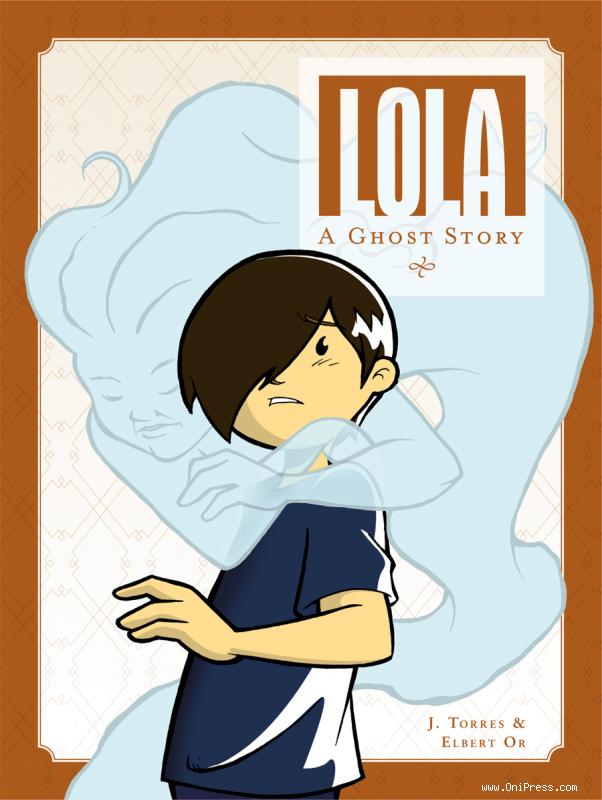
Lola: a Ghost Story

Lola: a Ghost Story
(From the artist's deviantArt page)
J. Torres and Elbert Orr

Now I shall attempt something never having been done in the history of YAs read YAs...

I'm going to try and review a graphic novel.

I know. You're shocked. I'm shocked. But I've got to spread my wings, like the majestic cabbage moth.

Okay. Summary time.

Jesse is gifted (or possibly cursed) with the ability to see demons and dead people. He doesn't know anyone else who can do the same- except his grandmother. Their relationship was strained (she tried drowning him) while she was alive. Going to the Phillipines for her funeral, he doesn't expect much from the rest of his extended family. But while he faces his demons, can he help others, too?

Ugh. I was doing so well with that until that last sentence. Anyhow, review time.

Jesse, the protagonist, is all around a really likeable character. He's mostly quiet and scared of lots of things (Seeing ghosts, you know?), but he isn't a cut-and-dry coward. In fact, he's not a coward at all. Paranoid, yes, nervous, of course, a bit of a loner, who isn't? I would be if I could see dead people. Maybe if I met him as a person instead of a drawing on a piece of paper, I'd feel a bit differently, but whatever. He doesn't exist. His entire life does not exist. Nothing exists. Nothing but the void.

*Cough* Well, onto the weather. I mean plot.

Let me remind you (in case you forgot since The Lost Snuggie) that I am in love with folktales and monsters and demons and such. I also like mermaids, but they come up a lot less. So the fact that there were things that go bump in the night totally amped up the plot points for me. However, the plot would definitely do great even if it weren't being read by the monster-obsessed me.

While I can't review the writing style, which usually fills this empty spot in the review, I will talk about the execution. Since the story bordered on the horror genre, secrecy and slow reveals were fairly important. They were mostly good, but could get a little confusing.

Oh! And translations. I love the way that translating the Tagalog words into English was set up. It always kind of annoys me when dialogue translations are done like this- "Delicioso! Delicious!" He exclaimed. Like, who would translate what they say after they say it. Asterisks are the way the cool kids do it. I am 100% pro-Asterisk.

Through all my love, I have one thing to say, and it's not even the book's fault. The fact that it was labeled "7+" (at least where I saw it) kinda gets me. I'd hate to say "Shield your children! They can't know about reality!", I don't think this is exactly suited for "7+". There are dead people. I mean, like, really, really dead people. And a brief show of drinking problems, but I'm more concerned about the dead people. When I was seven, I was scared of friggn' Scooby Doo. Personally, I think a bit higher age rating is necessary.

I feel so old saying that.

Well, short review. I loved the book with my own heart and the hearts of all those in my control. Since there's nothing to whine about, I'm just going to gently force you to read it.

Read it.

Sunday, February 23, 2014

Into That Forest

Into That Forest
(Image from its goodreads page)
Louis Nowra


Becky and Hannah are on a family trip (Hannah’s family, anyhow) when a flood catches them off guard. Though Hannah’s parents are killed, the two girls survive and are found by Tasmanian Tigers. The tigers, having lost their pups, take Becky and Hannah in as their own. Soon the girls forget their language and assume the life of a tiger.

Wow. Horrid description I just wrote, but there it is.

Before we start, for the poor, uneducated not Australian readers, I’ll clear up a few things. First of all, the narrator (Hannah) almost always refers to Tasmanian Tigers as just “tigers”. No, this is not the big stripey cat that goes on adventures with Calvin and somesuch. It means Thylacine, which went extinct in 1936. Google Thylacine, it’ll make this book make much more sense. The tigers aren’t described much.

May I also clear up that the main part of this book is set sometime in the early twentieth century. In case that concerns you. It concerns me. I’m very concerned. Extraordinarily so. I was duped into thinking this wasn’t a historical. I am horribly wounded.

Finally, I want you all to know that this kind of pushes the limits of a YA book. The main character at her oldest in the book is 10, but it is... themey. I wouldn't recommend this for anyone
under sixteen.

A couple trigger warnings for the book: Mentions of almost-rape and suicide.

From the warnings onto the review.

Despite being an extremely short book for the number of plot points in it, the timing and execution were wonderful. The plot, even if it seemed kind of run-of-the-mill (child[ren] gets lost in wilderness, they're raised by animals), had an air of originality to it. I'm not exactly an expert on the trope, though, so I actually have no idea how original it really was.

The format was a little odd, since it's being told by Hannah when she's 76. Her grammar is also a bit weird (read: horrible) because she had to relearn her English later on. It can catch you up if you don't learn to ignore it, which usually starts on the third page after picking up the book.

I'm going to have to repeat what I said in an earlier review about a different book. It didn't scream at me that if I put the book down I would die a horrible death at a random time. However, I definitely didn't regret picking it up. There weren't any chapter breaks, which was kind of irritating at first, but I think it actually made it a bit better. If the scenes were actually separated, I'd probably put it down and forget about it, whispering to myself it's okay, you'll remember where you were- really. This is the fate of uncountable books of mine.

So, checking in on what the goodreaders think (I do that occasionally, it's like being transported into a mystical world where everyone is right and wrong at the same time), I'm surprised about what people thought about the emotions in the book. Personally, I'm thinking I'm either really, really, not emotional, or everyone else is wrong. I lean towards the latter. I didn't find the book particularly heartrending. I found the parts where it was supposed to be, and even cried at some of them, but overall? Not really. It was like there was a veil of apathy from the narration, a quick assuring of "But I guess that's just how it happened, its okay."

No matter how unemotional it was, I did feel a connection with the characters. Becky and Hannah were polar opposites at the beginning of the book (Becky was a little lady and Hannah was a little monster), but grow into more interesting, well-developed characters as the story progresses.

I don't usually delve into my social justice warrior side during reviews, but I'm going to bring it up now because I can and no one is going to stop me. I'm not going to pretend to be an expert on Australia and what goes on in it (other than killer trees, octopi that can and will kill you, and something called the frickn' sea wasp), but from any viewpoint the book was less than politically correct. First off, the main character (SPOILERS) almost gets raped, and its treated like, yeah, that happened or whatever. What the heck. Nah, just near sexual assault, nothing wrong here. It's never even mentioned after it happened.

Along with that, the Aboriginal people of Australia are always referred to as "the black fellas". Okay, I get it's the 1930s and whatnot, but really? I don't want to speak for others, but the light they're painted in isn't the greatest, either. And do not say, "It's the 1930s! It was just being realistic for the time period!" You can write historicals without being 100000000% accurate on everything that's being said. Especially when sounding like a semi-decent person is at stake. Unless it's Regency era England. People will find the slightest details ("THE WORD 'SLEAZE' WASN'T IN USE AT THAT TIME OMG DO YOUR RESEARCH") and run with it for those.

*Coughs*

Uh. Ignore that, if you wish. Occasionally I just need to rant.

Ignoring those two issues, the writing style was actually really interesting. It was descriptive enough to know what was going, but not excessive. It was largely simple speak, almost bordering on beige prose. It pulled it off, though. It sounded more genuine than boring.

The ending was bittersweet. It was interesting and a good way to end, saying what happened after the book instead of making the rest of us yell at inanimate objects in hopes they'll tell us their secrets. At the same time, though, I kind of wish there was a little bit more after (SPOILER SPOILER SPOILER) Becky died.

Overall, decent book, would read again if I had to.

~Corinne

Friday, February 14, 2014

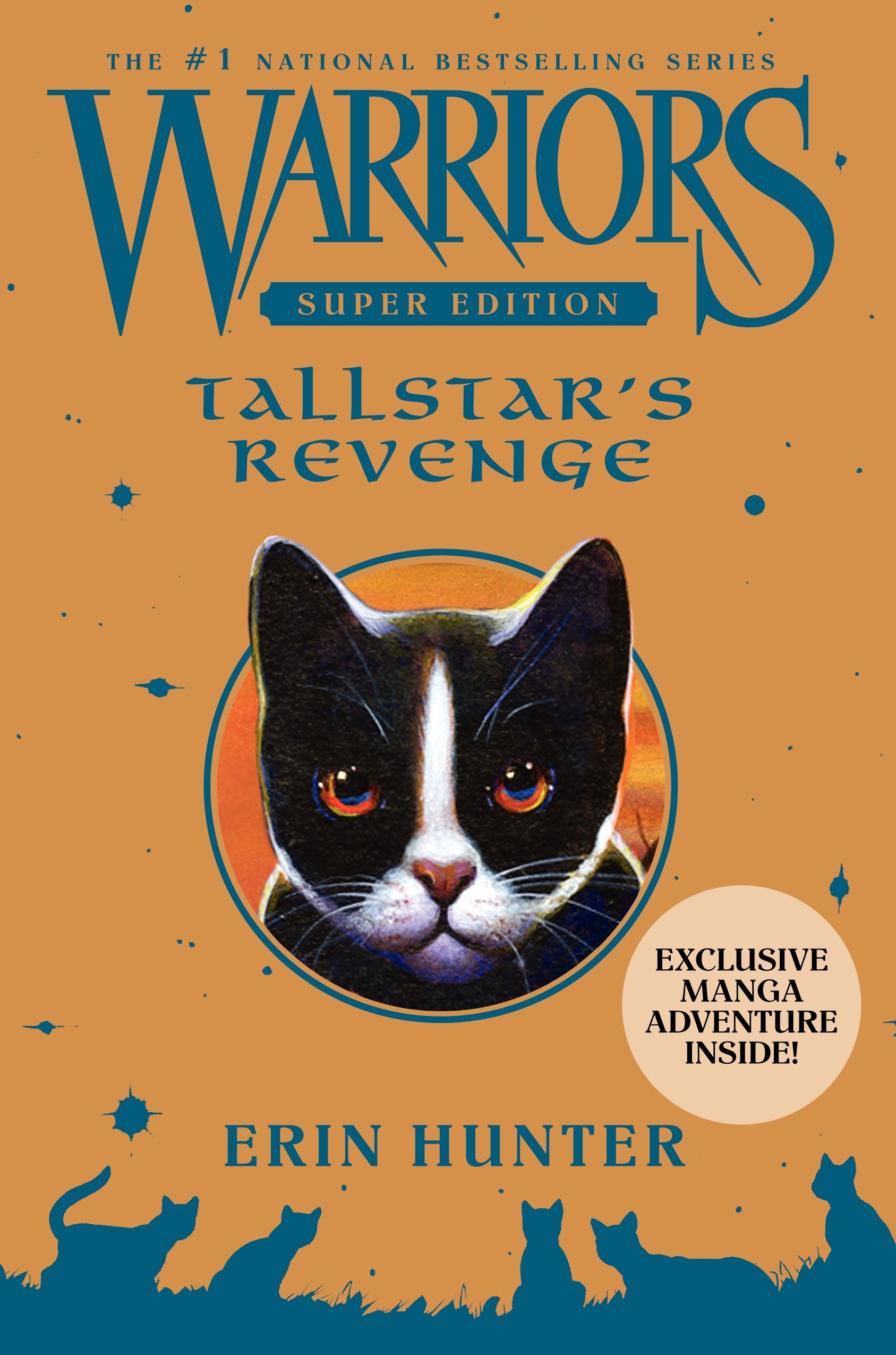
Tallstar's Revenge

Tallstar's Revenge
Erin Hunter
(Image from the Warriors wiki page)
WindClan is divided- tunnelers, who, as the name suggests, dig tunnels for escape routes, shortcuts, and ease of catching prey; and moor runners, who catch prey on the open moor. Tallkit is born into this broken society with his destiny practically sealed. His parents were both tunnelers, and most likely he will be, too. He hates this fate, but when his father is killed, he is determined to take up the duty. But he's denied, and the cat Tallpaw believes killed his father is let off the hook. Tunneling is stopped entirely.

When he gains his warrior name, he notices how little importance he seems to be. Talltail decides to leave the clan, planning to avenge his father. But can his plans ever come to fruition?
 
Since I enjoy lengthy anecdotes that you guys don't care about, I'm going to tell you why I picked up this book.

I started reading the Warriors book when I was really young- way too young to understand what was going on and also too young to understand why a book wouldn't have pictures. I kept reading the series for years. This past year, however, I called it quits. Doveykins and co. were rampant Sues (actually, maybe they weren't, I haven't reread them yet to check) and things were getting predictable.

So when I found this at the library, I figured it would be a decent reminder of why I might have read the series in the first place, and if it wasn't, hey, I could still read it for the laughs. 
I was pleasantly surprised by the reason I actually kept reading.

Talltail (Okay, Tallstar, but Talltail is what he's called for most of the book, so why change that?) was by no stretch a Stu, however angsty he may have been. For a large part of the book he's described as having a "burning rage" and that gets in the way of true development, but it gets better as the story progresses. He ends as a loveable, well-developed character.

I was amazed how well things in this book were tied in with other Warriors books. The main plot, maybe not so, but there were a lot of fun details to catch. There were also a myriad of technical errors (Appledawn changed gender within a page of the last use of pronouns), though that's become pretty much the norm in the books.

The plot was... unpredictable, almost? I don't know. In hindsight, I feel like I should have expected the find-yourself journey, because those seem pretty popular in Super Editions (Firestar's Quest, briefly in Crookedstar's Promise, I think). However, I was actually fairly surprised when Talltail decided to hunt down Sparrow. In fact, I didn't expect a number of things. It was a good change from my usual.
Got to say, this book wasn't emotional (for the reader, not the cats) for such a long time, it was almost disappointing. It almost got me thinking that despite the cast of snowflakes, it wasn't going to have power. Then at the end... oh, just you wait. 
 The execution and timing were great. Of course, the book was also extremely long, but why else would they call it a super edition?

Oh my deities, if I was still in the Warriors fandom, I'd so be squealing over how cute the friendship between Jake and Talltail was. However, as a reviewer, I must keep calm and collected. Though if I wasn't a reviewer, I feel you should know that I'd being cooing how beautiful they are together. And if I was in the fandom again, which I'm not, I would be squeeing about how, though it wasn't quite realistic that they became besties in a matter of days, they made perfect friends. You should also know that, say I was still a fan, I would be sad that they didn't meet up again later on. But I'm not a fan, even a little, so I'll say it in reviewing terms- it was okay.

Because there was no romance in this book, I'm allowed to mention it before the end. In most of the other books, there was unnecessary romance. (SPOILER: What's with Dovewing and Bumblestripe?) However, this book didn't have any. I took a moment to be surprised, then realized that, well, Tallstar didn't have any kits in the books, did he? So a thanks to Ms. Hunter for not throwing in lovely-dovely love as a trim.

Actually, I'm glad there weren't too many subplots. I hate it when books get a bunch of subplots that get in the way of the main plot. This was a perfect balance, not too simple, not to complicated. The Goldilocks zone of plots.

Ooh, two posts in two days. Lucky, lucky.
~Corinne

Thursday, February 13, 2014

Whatever that means

Some dumb descriptions I've seen and want to compile into a sort-of complaint. Not going to say what book they're from because I'm a good person. But I'll still put a little blurb about it afterwards.

"... he had abs of chiseled smoke." What? No, seriously, what? Not that it was a good story anyway (focused on a daughter of Artemis, who I'd like to point out is an eternal virgin), but that really takes the cake. And how do you chisel smoke, anyway? Isn't it a gas? Unless, of course, you managed to freeze it and then chisel it, but that's complicated and weird. And that would mean his abs were gray, wouldn't it? Creeeeeppyyyyy.

"... Percy mumbled boldly." How? This makes as much sense as My Immortal and "he mumbled loudly".

"His brows knitted into a question mark." Ow?

"... and his cheekbones were dangerously sharp." Okay, I get I shouldn't expect much from free kindle books, but really. Does he use them as weapons or something? I can picture it now- cheekbone fencing, the great sport of 2014.

"His husky voice was silky." Contradictions are not your friend, my friend. Also, remind me that I'm not actually supposed to read recommendations from people I only talk to about once a week. Glad it was free, but I so could have just found the Wikipedia article or something if I wanted to keep a decent conversation about the story.

"But where Rio stands at 6'0..." Whoa, we're measuring, now. You just met them, MC, do you whip out that tape measure on everyone you meet? You must be the life of the party.

"He stands at 6'1." Apparently she does.

"There was a very pregnant pause." I see this a lot, but mostly in the Harry Potter books. When the pause due? Oh, dear, I hope I can find something good for the baby shower.

"... his shoulders and arms seemed to be crafted by angels..." This isn't so odd on its own, but it was part of a description that also including calling his body mouthwatering and saying his collarbone protruded out of tan skin. The MC later deemed these thoughts 'impure'. I'm assuming she's a nun or something.

"He blushed a deep sanguine." That cannot be healthy. (For those who don't know, sanguine is roughly this color.)

One I see too much: "A single tear etched its way down [their] face." Ow. That tear must be really sharp, engraving on your face like that. Interestingly, the resulting scars are never mentioned. 

"The cold chilly air..." I'm not sure if the author just forgot that there was already an adjective in there or what. Perhaps "cold" was too cold and "chilly" wasn't cold enough. I'm not about to ask.

"... her hair, a silver-white blonde." It has it's own word, you know. Try sounding it out- plat-in-um bul-ond. Wow! Congrats! You win!

Anything along the lines of "sleep consumed me". You know, some people just go to sleep. No need to make it sound like sleep is some kind of bogeyman that eats you when you're tired.

Aaaaaand, as a parting treasure, I found this tagline and want to ask about it: "I'm hidden like a rainbow, yet you still can't find me..." I was given the suggestion it was sarcasm because rainbows are really big and flashy, but it seemed extremely serious. I just don't know.

~Corinne

Saturday, January 18, 2014

If You Could Be Mine

If You Could Be Mine
(Image from its goodreads page)
Sara Farizan

This book was getting a lot of awe and wonder in Diversity in YA-esque groups, so I decided to give it a try. Oh, and this is the book I referenced in my last review of The Lost Remote (inside joke inside joke). So you know.


On my second failed attempt of writing a summary for this, here is the goodreads summary:

Seventeen-year-old Sahar has been in love with her best friend, Nasrin, since they were six. They’ve shared stolen kisses and romantic promises. But Iran is a dangerous place for two girls in love—Sahar and Nasrin could be beaten, imprisoned, even executed if their relationship came to light.

So they carry on in secret—until Nasrin’s parents announce that they’ve arranged for her marriage. Nasrin tries to persuade Sahar that they can go on as they have been, only now with new comforts provided by the decent, well-to-do doctor Nasrin will marry. But Sahar dreams of loving Nasrin exclusively—and openly.

Then Sahar discovers what seems like the perfect solution. In Iran, homosexuality may be a crime, but to be a man trapped in a woman’s body is seen as nature’s mistake, and sex reassignment is legal and accessible. As a man, Sahar could be the one to marry Nasrin. Sahar will never be able to love the one she wants, in the body she wants to be loved in, without risking her life. Is saving her love worth sacrificing her true self?


There. That's good enough. Long, but a fairly good, semi-spoilery summary. Okay. 
This book is possibly one of the most important books I have ever read. Frankly, I think that If You Could Be Mine should be taught in school instead of the same three books every year. There does happen to be one problem, though.
Schools don't like the idea of lesbians. Oh, sure, drugs, alcohol, suicide? Those are cool. We can keep those. But lesbians? God, are you trying to kill us? And lesbians facing real world problems instead of things that will never happen but sound moral-ful? This is clearly a problem. Hold me, I'm feeling faint. 
Ignoring that little rant, yes, Sahar and Nasirin face some pretty serious issues. Drugs and alcohol are referenced, death is faced and people fall into the amazing pit that is the gender spectrum. Religion is mentioned and religion is questioned. These are things that happen. Oh, and apparently other countries exist.

Since this book is a romance book (I know, what is this, the second one on all of Yas Read Yas?), I'm going to start instead of end with the romance. 

Sahar and Nasirin are definitely working on the "opposites attract" idea. I've always that of that as a rule only for magnets, but apparently people generate magnetic fields and it works for humans, too. Sahar is a bit of a tomboy, even though it doesn't quite show in the book. Nasirin, however, is pretty-in-pink feminine. Somehow, though, it works. I'm not sure if my opinion has something to do with the fact that this is a romance novel, so it has to work, or what, but I liked it. There was always a slight (and sometimes less slight) note of irritation with Nasirin from Sahar, but the chemistry was there.

On the actual plot (Whaaaaaaat, the plot wasn't the romance? I know. Crazy. I know non-romance novels that the romance was actually the plot), it was a bit odd. Not in a bad, oh-gods-of-Asgard-and-other-such-holy-places kind of way, but it was just a little strange. The arranged marriage part was interesting, but Sahar's attempt at changing her sex (not gender, though) seemed like the wrong way to go about stopping the marriage. It felt almost a bit forced.

The style was good, maybe not my favorite (Sahar almost sounded lost in her thoughts at random points), but certainly not a turn-off. The pacing was great, almost perfect. Actually, I'm not sure what perfect would be, since this is the best pacing I've seen so far, but I'm sure I'd know it when I saw it.

I really liked the random cultural tidbits about, say, how in Iran you don't put sugar in your tea, you crack sugars cubes between your teeth and drink through them. Though my tea-drinking habits will remain unchanged, it was interesting to learn about the cultures of other countries.

So, I mentioned that there were important (read: somewhat adult) topics in here. Yeah, while drugs and alcohol weren't a focus, and sex wasn't a huge thing, it was still kind of adult. Makes enough sense, since Sahar is seventeen and that's pretty late in the YA spectrum. So, I wouldn't recommend it to anyone who wants to shield their virgin eyes.

 Yay, spoilers! Mostly, I just want to talk about the ending, so I have to put it under the great arch of spoilerhood.

In the end, Nasirin and Sahar have to break up. Sahar goes off to college and Nasirin goes off to a really, really big house.

Sahar eventually visits Nasirin, and they decide the relationship wasn't right for them anyway and blah blah blah.

Now, here's the entire reason I spent the past, like, ten minutes working on that fancy, rainbow text. I have to ask why?! Why can't I find a story about lesbians that ends happily? That ends up with them happy and together? Is it a rule, that as a lesbian, your life must be tragic and you'll feel no love? Why must this happen to me all the time?

Now, if anyone knows about happy lesbians, feel free to comment.

~Corinne